
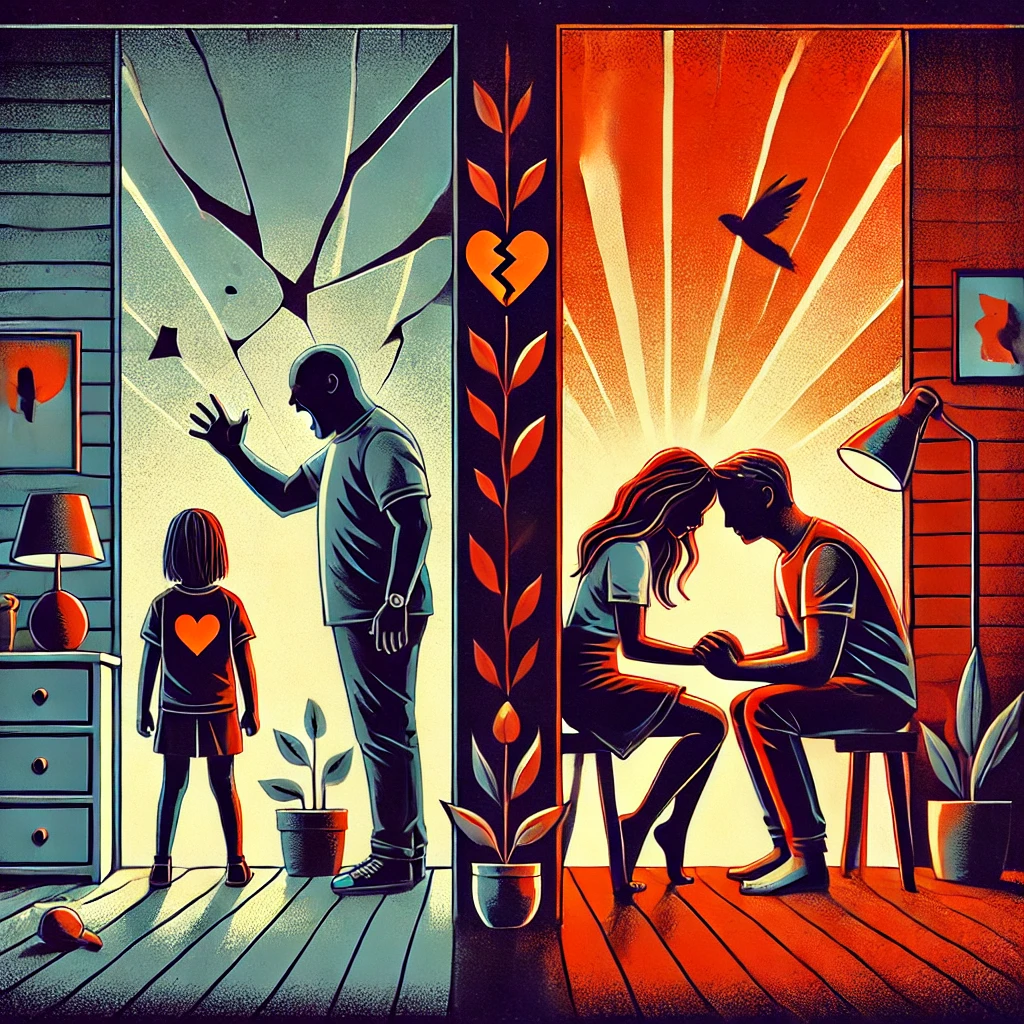
What happens when children grow up witnessing violence between their parents?
According to a new UK study, the answer may reach far beyond childhood — and well into their own intimate relationships as young adults.
🧪 What Did the Study Find?
Researchers from the University of Bristol analyzed data from over 3200 young adults (aged 18–21) and their mothers, using the ALSPAC birth cohort.
They examined:
- Whether young people had been exposed to their mother being abused by a partner
- Whether they themselves later perpetrated or experienced psychological, physical, or sexual abuse in relationships
- Differences in outcomes between young men and women
📊 Key Findings:
- 👨 Young men exposed to maternal physical violence had a 45% higher risk of becoming perpetrators themselves
- 👩 Young women exposed to maternal psychological abuse were more likely to become victims in their own relationships
- When IPVA (Intimate Partner Violence and Abuse) was combined with direct child maltreatment, the risk of continuing the cycle increased
But here’s something critical:
These factors only explained around 10% of young adult relationship abuse cases.
So while childhood exposure plays a role, the vast majority of cases arise without it — a reminder that violence is a complex issue with many roots.
🧠 The take home message:
- 🔎 Don’t assume — but don’t ignore — the impact of childhood environment
- 🧩 Understand that patterns of abuse can be learned, but they are not inevitable
- 💬 Open dialogue is key: many young people may not recognize unhealthy dynamics if they grew up with them
As the authors put it, prevention needs to be broad and inclusive — not just targeted to those with visible trauma histories.
✋ Final Thought
The relationships we witness as children can deeply shape how we love, fight, and relate later in life.
But cycles can be broken — with awareness, support, and early intervention.
As future healthcare professionals, we’re in a unique position to help recognize the signs and offer support where it’s needed most.