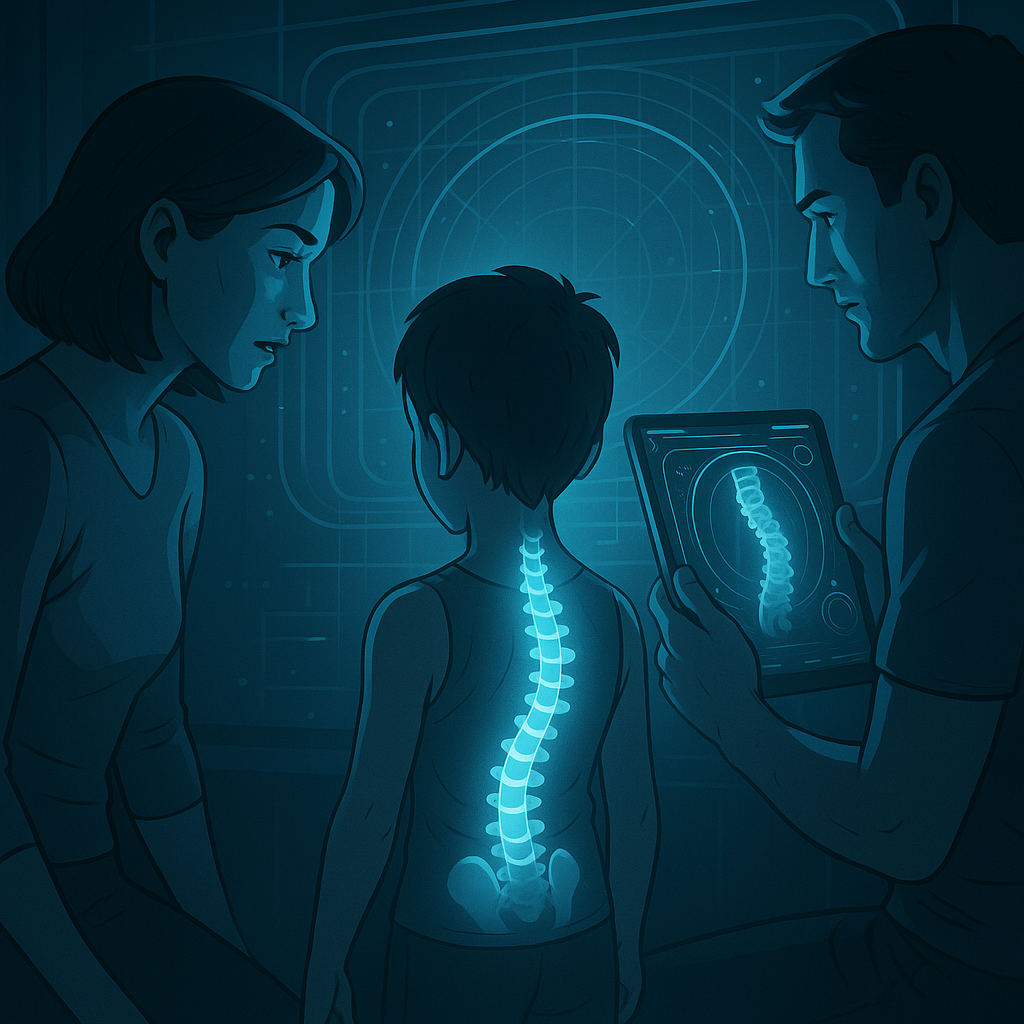
Recent advancements in scoliosis treatment have introduced exciting new options for young patients, especially through the use of artificial intelligence (AI). One groundbreaking tool is the Momentum Spine App, currently being tested at Cedars-Sinai Guerin Children’s Hospital in Los Angeles. This app allows parents to record videos of their children walking, which are transformed into a three-dimensional (3D) model of the spine. Using AI, the app accurately measures spinal curvature without the need for radiation, making assessments safer and more convenient.
The app can significantly reduce the travel burden for families, who often spend hours commuting for check-ups. Studies show that it is highly effective, accurately predicting spinal issues like adolescent idiopathic scoliosis (AIS). AIS is the most common type of scoliosis, affecting around 3 million new cases each year in the U.S., particularly in adolescents aged 10 to 18.
Treatment for scoliosis usually falls into three categories: observation for mild cases, bracing for moderate curves, and surgery for severe cases. Newer 3D braces have made bracing more comfortable and effective, encouraging better compliance from kids. Additionally, doctors are now exploring nighttime bracing for younger children to prevent the need for full-time bracing, which can be emotionally difficult.
Overall, the combination of innovative technology and updated treatment strategies offers hope for better outcomes in managing scoliosis, making a positive impact on the lives of affected children and their families.