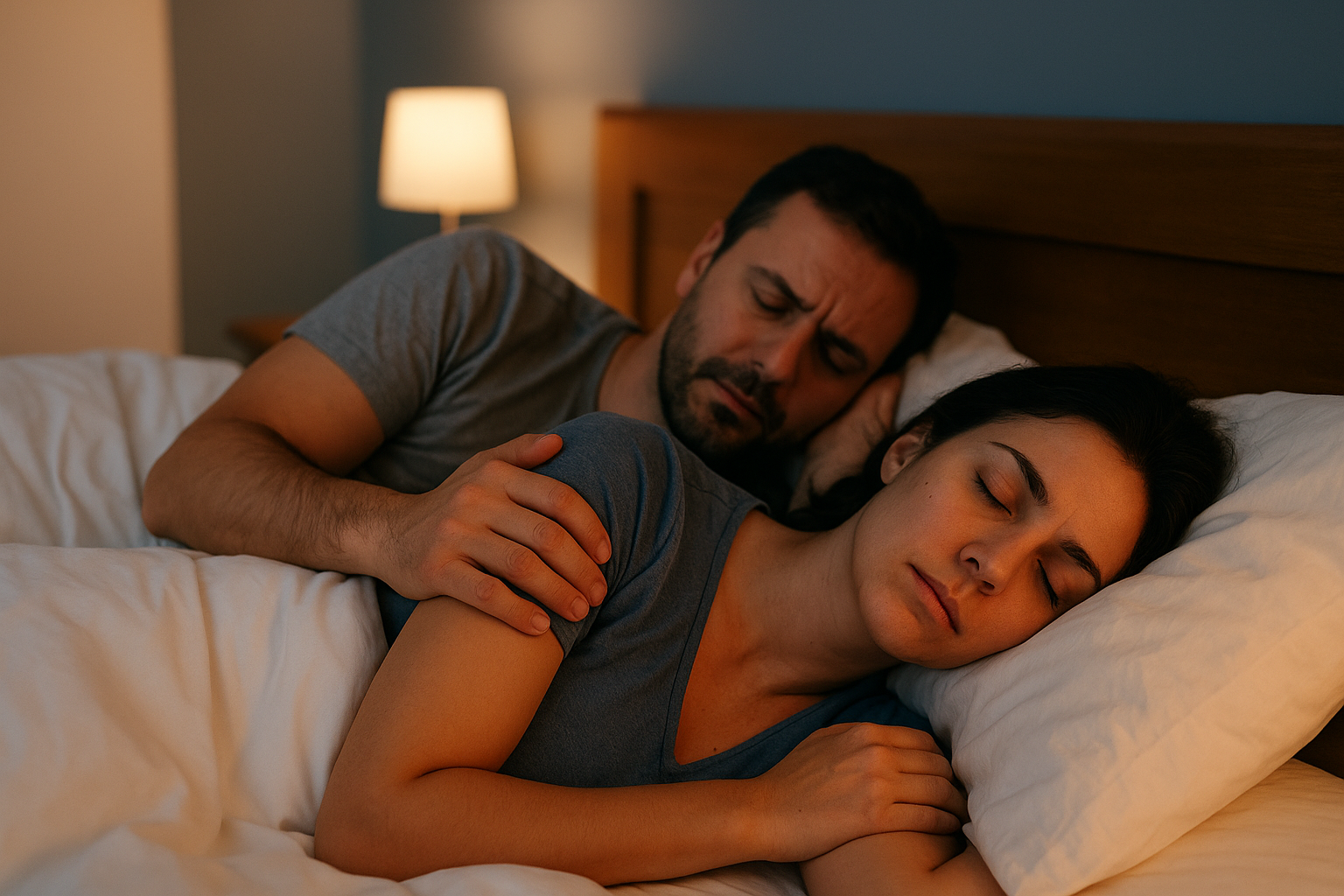
Obstructive sleep apnea (OSA) doesn’t just affect the person with the diagnosis — it also keeps their partners awake, leading to exhaustion, frustration, and even strain on the relationship. Nearly 30 million adults in the U.S. live with OSA, and researchers now call their partners the “hidden casualties” of the disorder.
But there’s good news: new research shows that treating sleep apnea together can make a big difference. A couples-based therapy called WePAP helps partners learn about OSA, support positive airway pressure (PAP) treatment, and work as a team to overcome challenges.
In clinical studies, couples who participated in WePAP had:
Higher adherence to PAP therapy
Better sleep efficiency
Greater relationship satisfaction and less conflict
As psychologist Wendy Troxel put it: “No one is at their best when they aren’t sleeping.”