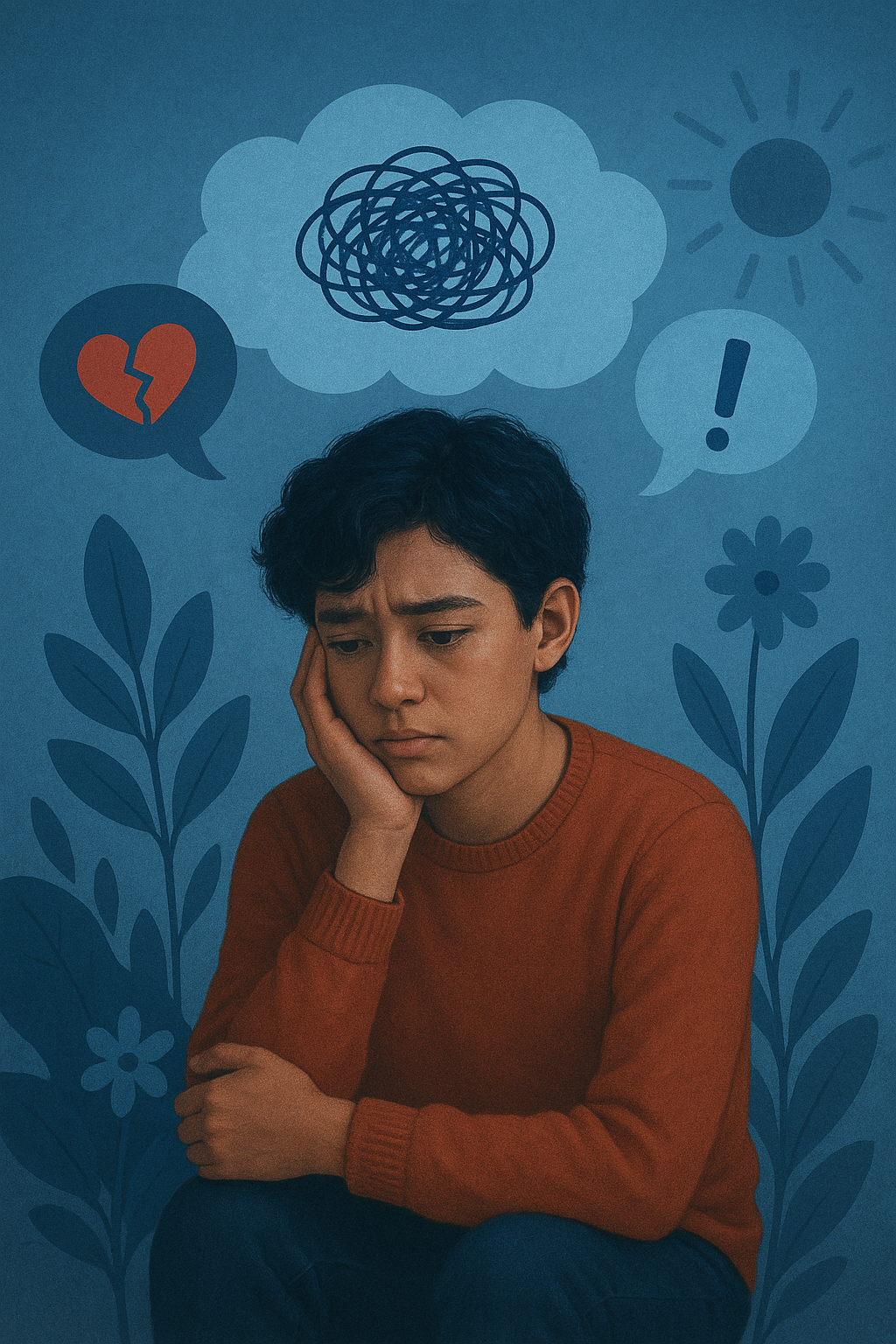
Life’s a lot right now — school stress, constant online pressure, and a world that feels unpredictable. No wonder so many young people are struggling with their mental health. In fact, more than 1 in 10 youth globally are living with a mental health disorder, and the rates rise as we get older, peaking in young adulthood. Anxiety is the most common challenge, while severe disorders like schizophrenia are far less common — but together, mental and substance-use disorders are the leading cause of disability for young people worldwide.
The tough part? These issues often start young, meaning they can follow people into adulthood if they’re not addressed early. And there’s no one-size-fits-all solution — different ages face different risks. For example, younger kids (5–9) may struggle more with things like anxiety and ADHD, while teens and young adults are more likely to face depression, stress-related issues, and substance use. That’s why experts are calling for age-specific support — like mental-health education in early school years and better access to help for older teens and college-age youth.
So why should you care? Because this isn’t just data — it’s real life, and chances are you’ve felt some of it or seen it in friends. Knowing what’s going on doesn’t make things magically easier, but it does help you understand you’re not alone. And it gives us power — the power to talk about it, to reach out for support, and to look out for each other. Young people are facing a real mental-health challenge, but with awareness, open conversations, and the right kind of help, we can push for change and protect our futures.