
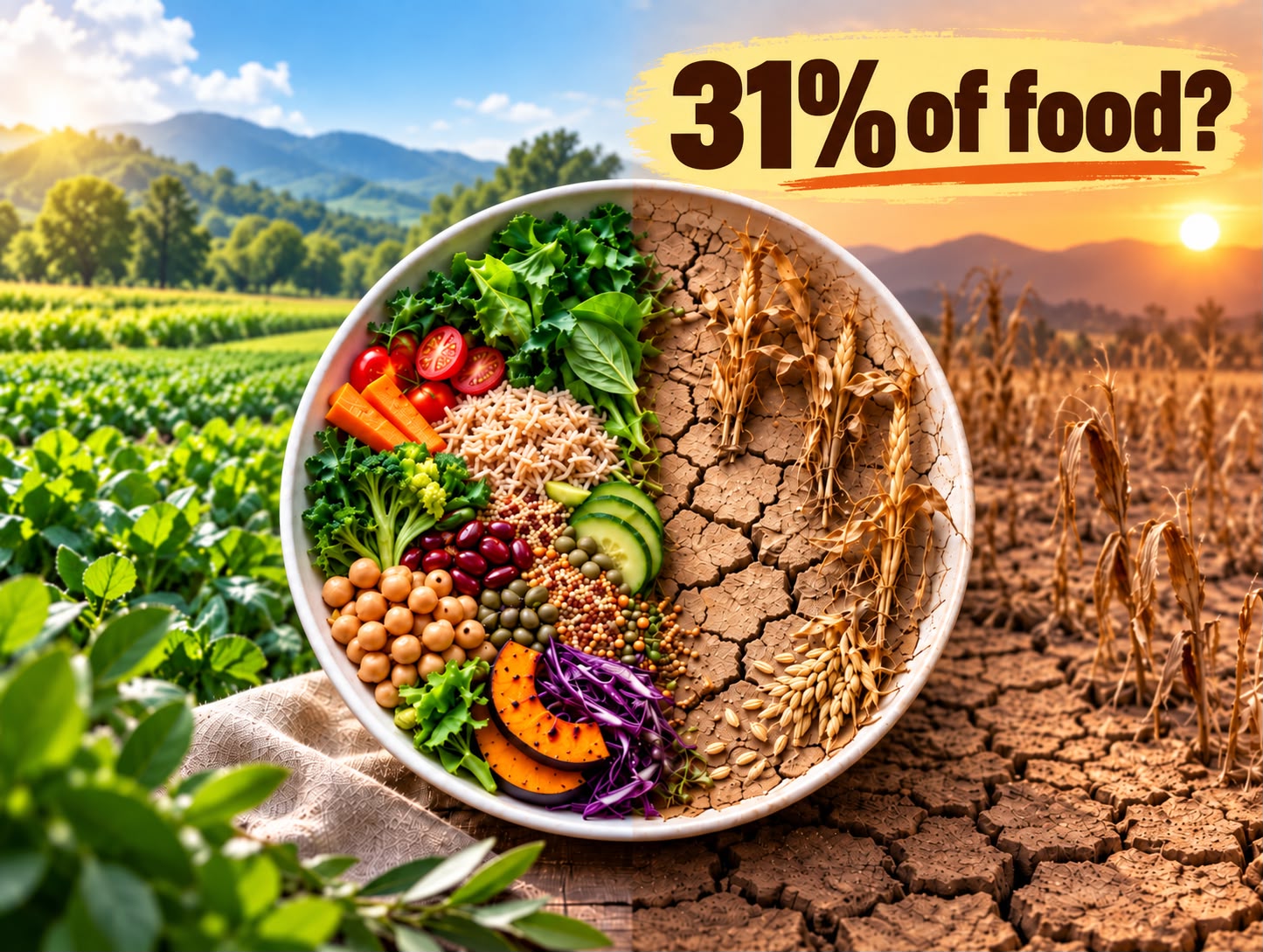
When we think about climate change, we usually picture heatwaves, floods, or melting ice. But a warmer planet could also change what food can be grown — and where
A recent study of 30 major food crops found that rising temperatures may reshape growing conditions around the world
What did researchers find?
- At 2°C of global warming, around 10–31% of current crop production in low-latitude regions could face climate conditions outside the range where those crops are commonly grown today.
- Around 52% of global cropland could experience a decrease in the number of crop types suited to its future climate.
- Rice is one example: about 17% of current rice production could fall outside its present safe climatic space.
This does not mean that these foods will simply disappear. Instead, farmers may need to adapt by changing crop varieties, farming methods, or even which crops they grow.
Why does this matter?
Less crop diversity can make food systems less flexible when facing:
- Heat and drought
- Extreme weather
- Changing growing conditions
- Pressure on food security
Can we adapt?
Yes. Climate-resilient crop varieties, crop diversification, improved irrigation, and better farming practices could help food systems adjust to a warmer climate.
Climate change may affect more than the weather — it could also shape what reaches our plates.
What food would you miss most if climate change made it harder to grow?
Author: Saif Ali Abdulateef AL-RUBAYE