
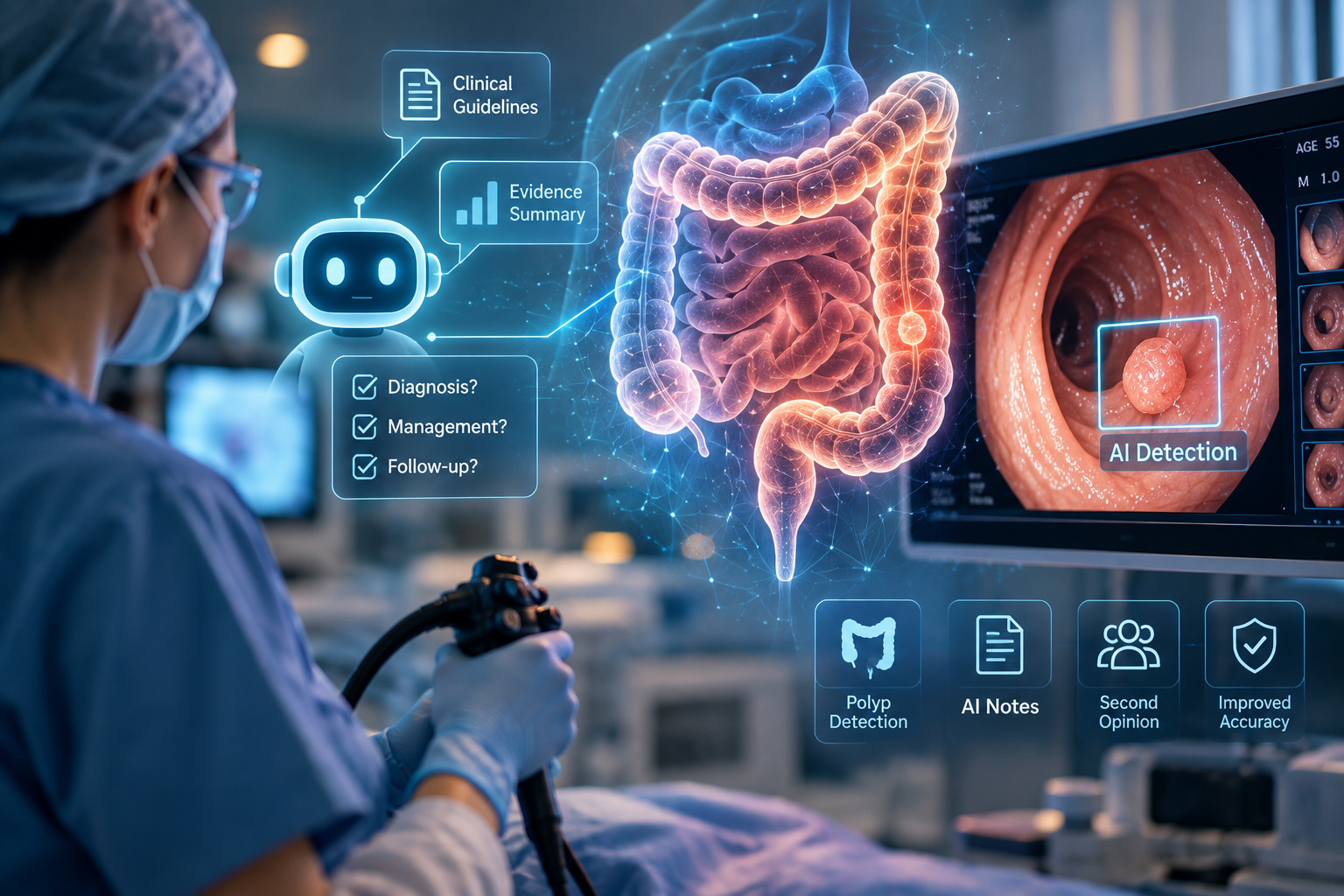
Imagine having an AI assistant that can help a doctor find information, check clinical guidelines, and even spot small abnormalities during a colonoscopy. This is already becoming a reality in gastroenterology.
This summer, the American Gastroenterological Association introduced Nigel, an AI assistant designed specifically for gastroenterology and liver medicine. Unlike general-purpose AI tools, Nigel is built around professional clinical guidelines and evidence, with input from gastroenterology and liver specialists.
AI is also being used during colonoscopy. Tools such as GI Genius can analyze the live video and highlight possible polyps that a doctor might otherwise miss. Research involving randomized clinical trials has found that AI-assisted colonoscopy can improve the detection of adenomas, although its benefits for more advanced lesions remain less certain.
But AI is not perfect. Gastroenterologists are concerned about inaccurate or outdated information, privacy problems, and automation bias — the tendency to trust a computer’s suggestion too much simply because it comes from technology.
Another promising use is ambient AI, which can help create clinical notes from conversations and reduce documentation work. But doctors still need to check AI-generated notes carefully for accuracy and completeness.
So, will AI replace gastroenterologists? Probably not what these tools are designed for. The bigger idea is AI as a second opinion, not a replacement for human judgment. The technology may help doctors work faster and spot more information, but the final clinical decision still belongs to a healthcare professional.
Source: Medscape Medical News
https://www.medscape.com/viewarticle/ai-gastroenterology-benefits-vs-harms-2026a1000ye3?_gl=1*y04kmv*_gcl_au*NDk4MTgwNDc2LjE3ODk3MTkwOTIuNTA4NTgxNTE1LjE3OTAzMjY1ODQuMTc5MDMyNjU5OC4xNzcxMTI5MzA2LjE3OTAyNDU1NDguMTc5MDMyNjU5OA..