
We all know that sleep matters. But is there actually a “right” amount of sleep — and does the way we sleep matter too?
A new study used wrist-tracker data from more than 95,000 UK Biobank participants to investigate how sleep patterns were linked to future health. Researchers looked at sleep duration, sleep stages such as REM and deep sleep, sleep irregularity, and how often people were awake during the night.
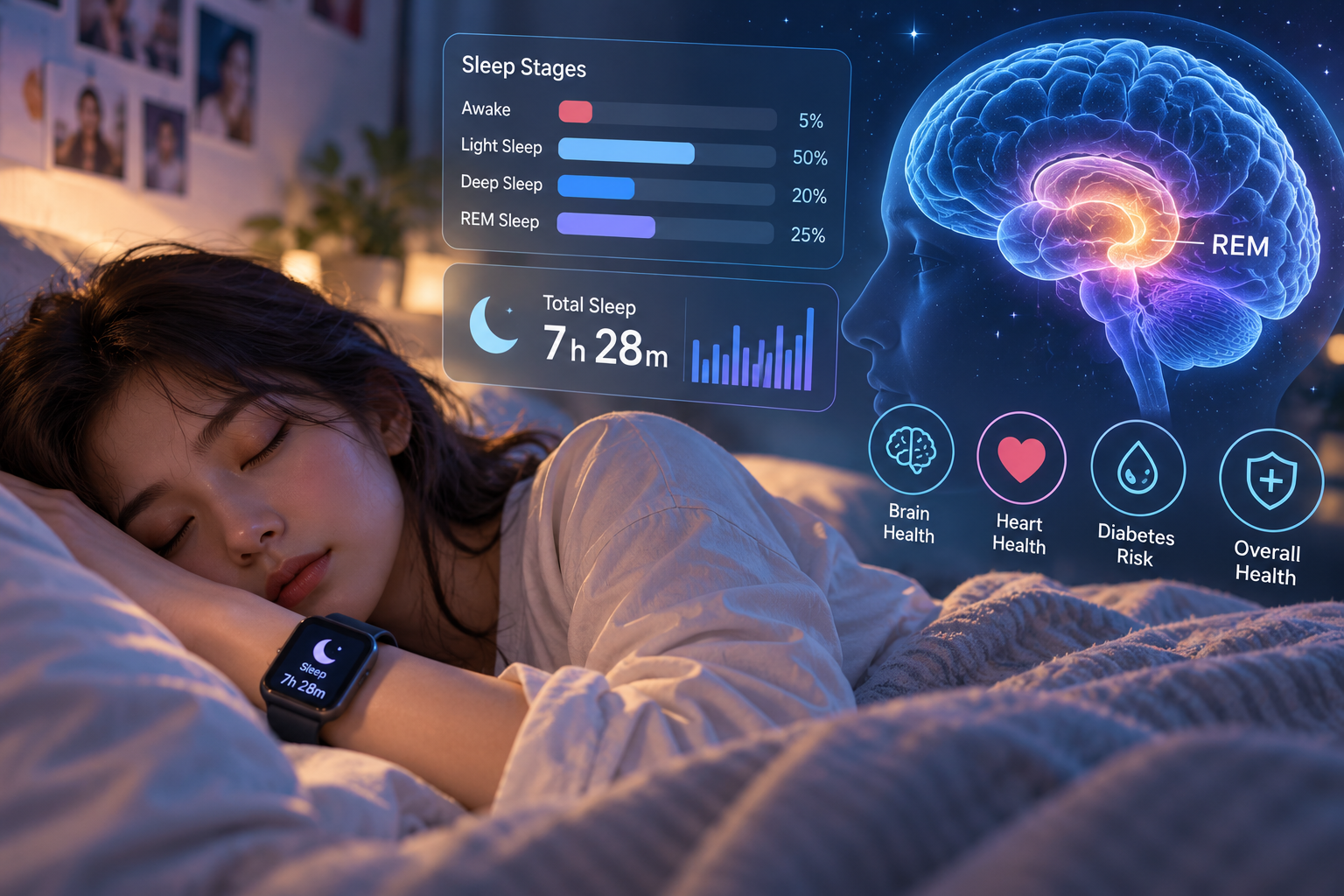
The study found that getting 6–8 hours of sleep per night was associated with lower risks across many health conditions. More REM sleep was also associated with lower risks of 83 different diseases, including Parkinson’s disease, multiple sclerosis, dementia, and heart failure. More deep sleep was associated with lower odds of conditions such as type 2 diabetes and major depressive disorder.
On the other hand, consistently sleeping for less than 6 hours was associated with higher risks for a number of diseases. Sleeping less than 5 hours showed the widest range of unfavorable associations. Irregular sleep patterns were also associated with higher risks of anxiety and major depressive disorder.
But there is an important catch. The researchers did not prove that poor sleep causes disease. Because this was an observational study, sleep problems could sometimes be a result of an underlying health condition rather than its cause. Also, wrist trackers estimate sleep stages from movement rather than directly measuring brain activity like a sleep-lab test.
So, the takeaway isn’t that everyone must sleep exactly eight hours. Instead, regular, sufficient sleep appears to be an important part of a healthy lifestyle. Your next good-health habit might be as simple as giving yourself enough time to sleep.
Source: Medscape Medical News
https://www.medscape.com/viewarticle/spermidine-are-health-benefits-backed-evidence-2026a1000z6j?ecd=a2a