
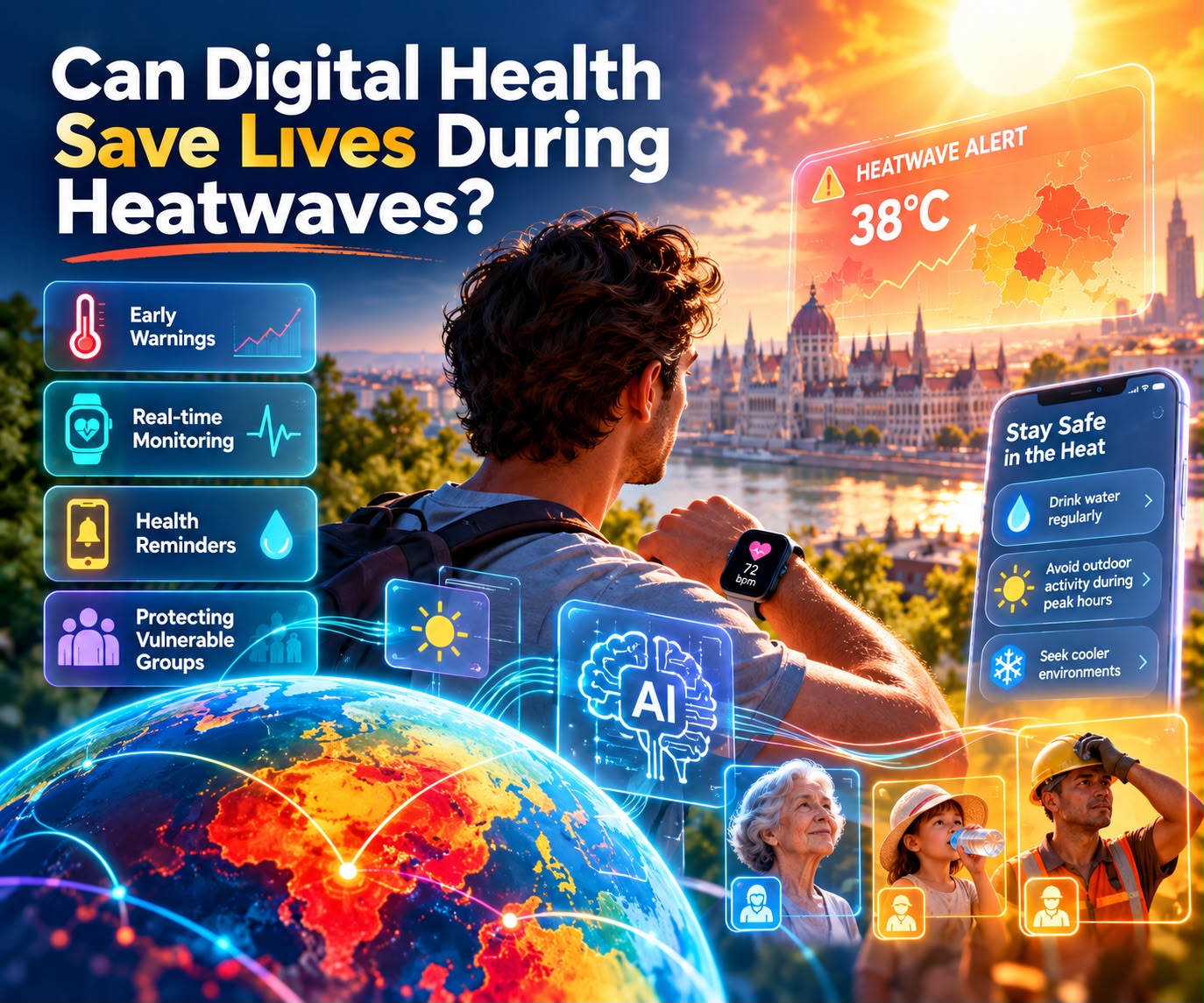
Heatwaves are becoming more intense, putting millions of people at risk. But could digital technology help us prevent heat-related emergencies?
How Can Technology Help?
Heat-health warning systems use weather and health data to identify dangerous conditions.
A recent scientific perspective proposes personalised digital alerts based on individual health risks.
Smartwatches can monitor signals such as heart rate, while mobile apps can remind us to take protective action.
although heat risks vary by health status. Researchers suggest three improvements:
- Personalised alerts based on health conditions and individual risk.
- Timely prompts encouraging safer actions, such as drinking water and avoiding peak heat.
- Accessible warnings adapted to different communities and needs.
Who Needs Extra Protection?
Older adults, people with chronic illnesses, and outdoor workers are particularly vulnerable. Digital alerts can encourage people to:
- Drink water regularly.
- Avoid strenuous activity during peak heat hours.
- Seek cooler environments.
- Check on vulnerable family members.
Can Technology Solve Everything?
Not entirely. Digital tools cannot replace medical care, and personalised warning systems still need further real-world validation. However, combining technology with public health measures could improve heatwave preparedness.
Can We Rely on AI?
Not yet on its own. These personalised systems are promising, but researchers emphasise that their effectiveness, accessibility, and fairness still need real-world evaluation. Technology should support—not replace—medical advice and public health protections.
What Do You Think?
Would you trust an AI-powered health app to help protect you during a heatwave?
Author: Saif Ali Abdulateef AL-RUBAYE