
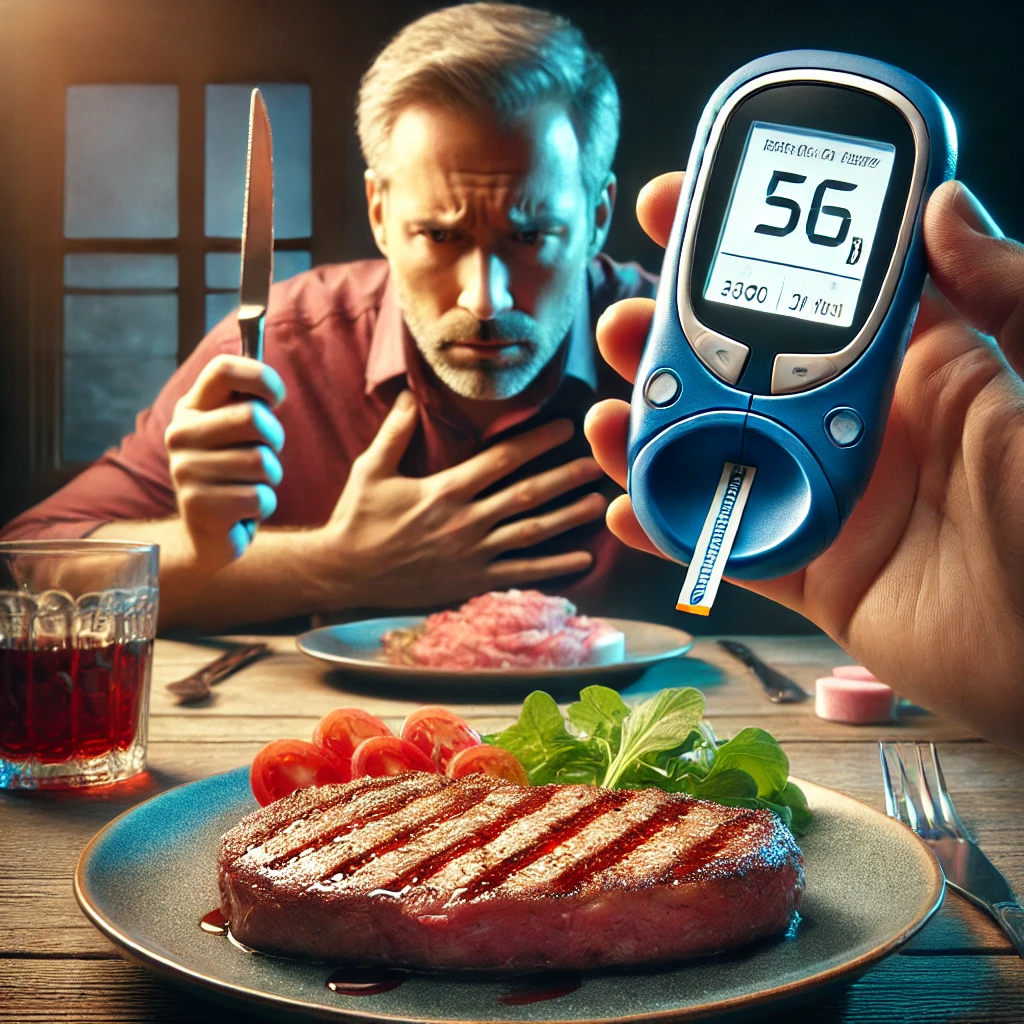
For many people, eating red meat is an important part of every celebration, as it has traditionally been linked to special occasions for many years. This long-standing tradition signifies a sense of festivity and cultural significance, making it a key element in marking moments of celebration.
Sadly, red meat intake is associated with a variation of health risks, including T2D, coronary heart disease, some types of cancer, and overall mortality. The large quantities of saturated fat and cholesterol, combined with low levels of polyunsaturated fat, are likely significant contributors to the risk. Additionally, high levels of heme iron, compounds that lead to the production of trimethylamine N-oxide, and other factors may also play a role in negative health outcomes. it could get worse with processed red meat.
So, should we stop eating red meat? The answer is no, but we should do it with moderation, although recommended quantities may differ in different studies.
In this study, regular consumption of each additional 50 grams of processed meat a day — equivalent to two slices of ham or bacon, or one small sausage — was associated with a 15% higher risk of developing T2D in the next 10 years. The effect of unprocessed red meat was smaller, as we found that eating an extra 100 grams per day was linked to a 10% increase in risk.
A recent study found that cutting processed meat consumption by a third could prevent over 350,000 diabetes cases in 10 years, equal to reducing about 10 slices of bacon per week per person.
But, when food is organic, we could say that there is less risk, even if further studies should be done on the matter.
An earlier study comparing the nutritional composition of organic and conventional beef meat sold at retail found that organic beef had 17% less cholesterol, 32% less fat, 16% less fatty acids, 24% less monounsaturated fatty acids, 170% more alpha-linolenic acid, 24% more alpha-tocopherol, 53% more beta-carotene, 34% more coenzyme Q10, and 72% more taurine than conventional beef.
It was concluded that the fat composition of the meat reflects the dietary intake of the animal. Therefore, grass-fed beef might be healthier than grain-fed beef, whether it is organic or not. A recent modelling study seems to support that view, The results indicated that individuals would receive more of the beneficial fatty acids (especially the essential omega-3, alpha-linolenic acid) from pasture-fed beef, produced either organically or conventionally.
Recent studies highlight the health benefits of shifting to plant-based proteins. They recommend prioritizing foods like nuts, beans, and soy over red meat, emphasizing the significant advantages for overall health. For those who prefer to keep red meat in their diet, they suggest limiting it to about one serving per week, adding that any steps toward reducing consumption can be beneficial.
As expected, industry representatives for beef, pork, and potatoes are pushing back against these findings, leaving the impact of their objections on the final guidelines uncertain.
On the other hand, advocates argue that reducing meat consumption could not only lower the risk of type 2 diabetes and other health issues but also benefit the environment.