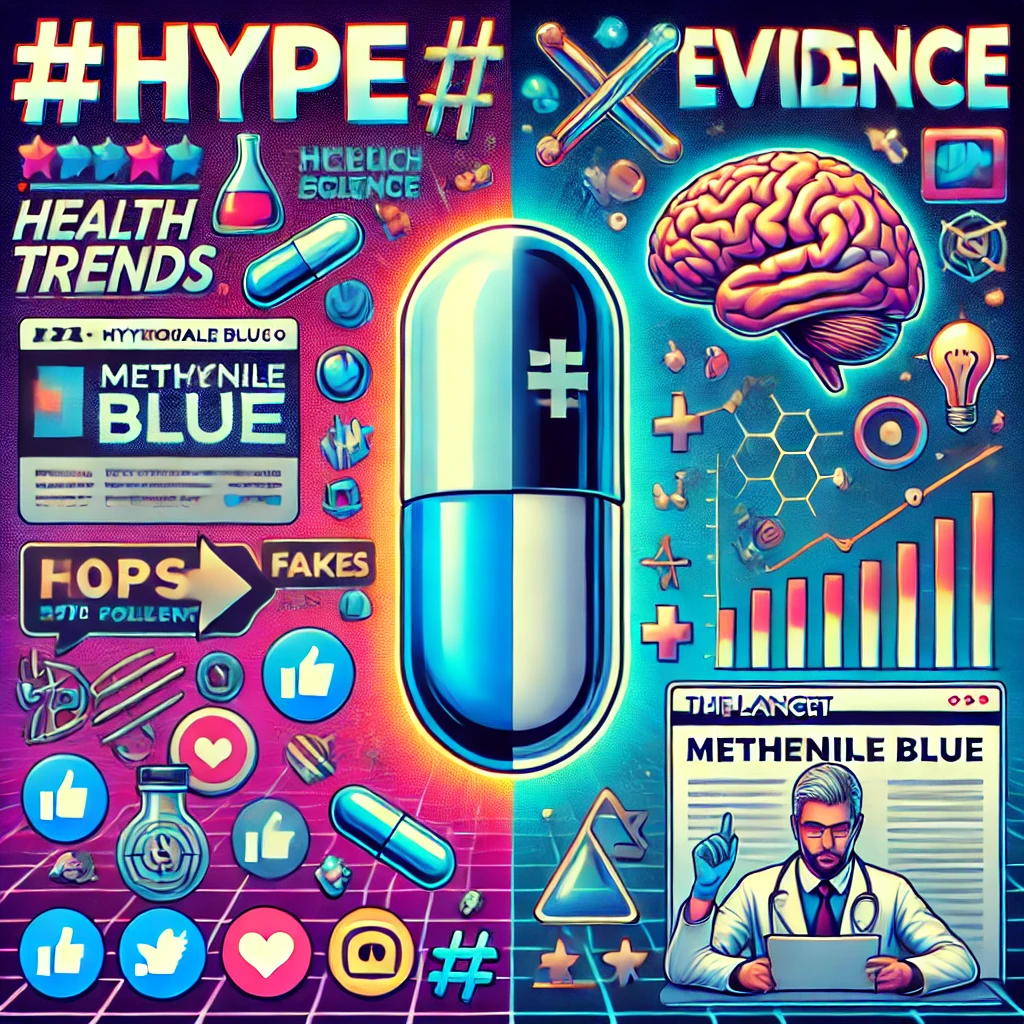
Lately, methylene blue has gone viral—touted by influencers as a brain booster, immune helper, and even a cancer fighter. But is it really the next big thing in health, or just another risky trend?
What is it, really?
Methylene blue is a 19th-century dye with real medical uses. Doctors use it to treat:
- Malaria (in combo with other meds)
- Methemoglobinemia (a rare blood condition)
- Certain poisonings
It also changes color in lab tests, making it useful in science.
Sounds cool—so what’s the problem?
Used without medical guidance, methylene blue can be dangerous. Risks include:
- Serotonin syndrome (especially if you take antidepressants)
- Hemolytic anemia (if you have G6PD deficiency)
- Nausea, vomiting, blue pee, skin discoloration, blood pressure swings
It’s not a vitamin or a harmless supplement—it’s a powerful drug.
Does it help your brain?
Not really. Early research hinted at possible brain benefits, but larger studies (like one in The Lancet) showed it didn’t help people with Alzheimer’s.
Bottom line:
Methylene blue should not be taken as a DIY health hack. It’s not approved as a supplement or over-the-counter med, and pharmacists aren’t required to sell it.
This trend shows why science—and critical thinking—matter more than ever in healthcare. Don’t let hype override evidence.