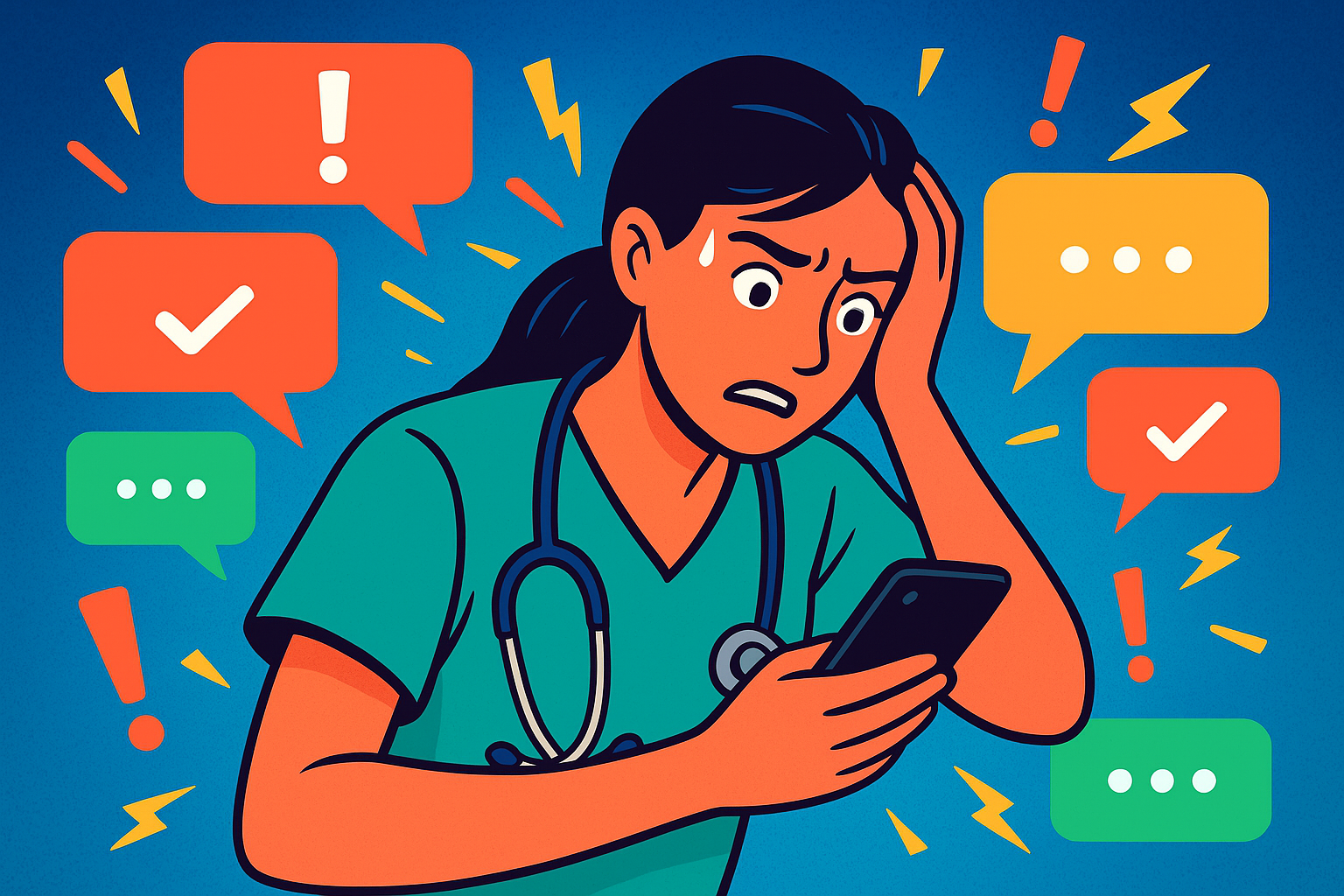
Imagine receiving over 130 messages in a single shift while trying to take care of patients. This is the reality for many hospital doctors (known as hospitalists), who deal with this issue every day through secure messaging systems designed to make healthcare communication faster and safer.
The problem is that these secure chat platforms (such as Epic Secure Chat and TigerText) were intended to replace pagers and facilitate teamwork, but now doctors are reporting message overload. Some receive a new message every five minutes, ranging from urgent medical updates to casual ‘thanks!’ replies.
Researchers at the University of Colorado found that, of nearly 2,700 messages sent in one day, only a small fraction were truly urgent. Many were ‘low-acuity’ — acknowledgements, apologies or friendly emojis. While kindness matters, too many messages can lead to more interruptions and a higher chance of mistakes.
The upside:
- Easier teamwork
- Quicker communication
- No more pagers
The downside:
- Too many notifications
- Constant interruptions
- Confusing urgency levels
💡 Solutions that actually work:
Use emojis wisely. A 👍 or 😊 can replace an extra message and reduce the flood of texts.
Batch your replies. Send updates together instead of one line at a time.
Flag urgency correctly. Don’t label everything ‘urgent’ — this helps doctors prioritise safely.
Pick up the phone when needed. If a conversation drags on for too long, a good old-fashioned chat can still save time and lives.
One of the study’s authors, Dr Jessica Clawson, summed it up perfectly: ‘Policies are critical to minimising non-clinical chatter, but we all crave human connection.’ The trick is to find a balance — to keep communication efficient while staying human.
For young people heading into healthcare careers, this is a sneak preview of the digital reality of modern medicine: connection is everything, but clarity and calm can be lifesaving too. ❤️