
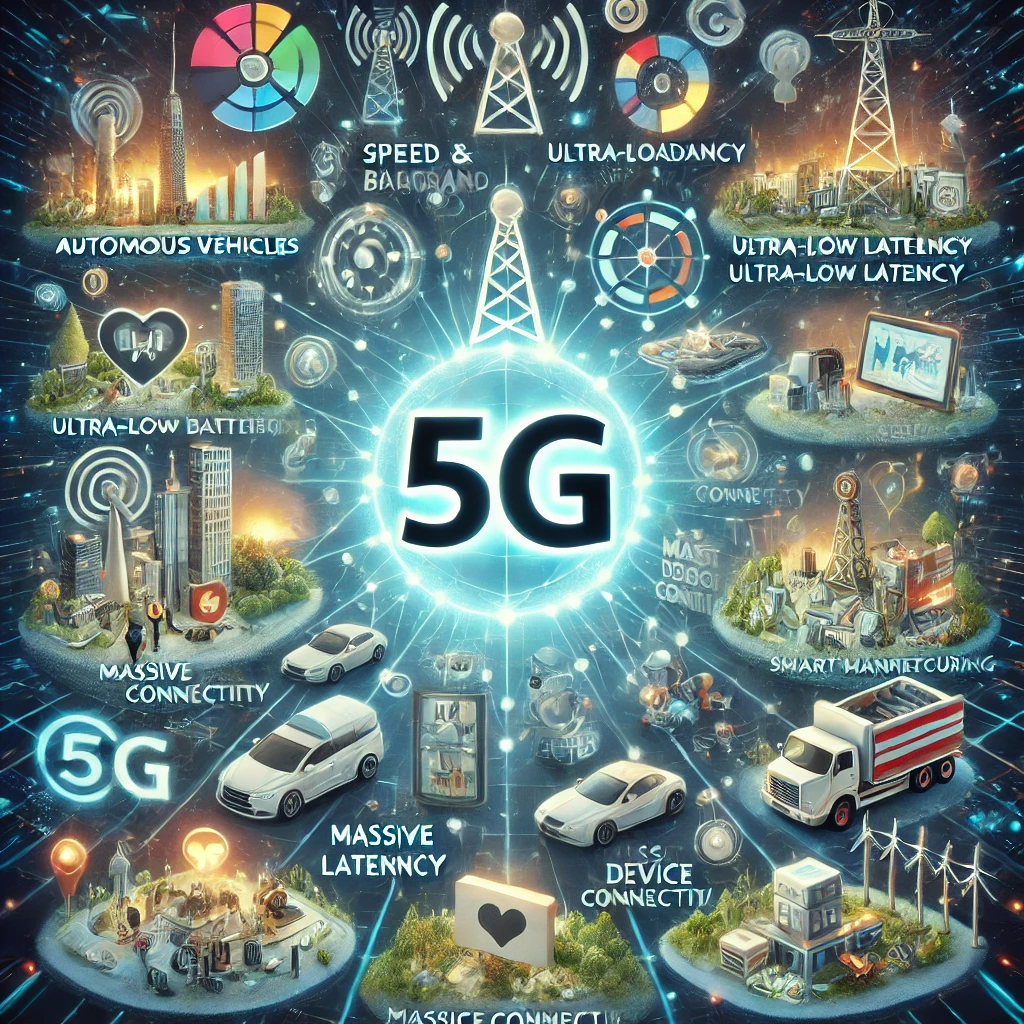
5G, the fifth generation of mobile technology, introduces significant improvements in speed, latency, and device connectivity. Beyond faster mobile internet, 5G facilitates the development of real-time applications like autonomous vehicles, remote surgery, and smart manufacturing. This paper highlights 5G’s technological features, key use cases, and socio-economic impact.This technology marks a major shift in mobile technology, enabling faster, more reliable connectivity and supporting real-time communication. Unlike previous generations, 5G is designed to support the digital transformation of society, enabling new industries and applications.
KEY CAPABILITIES
5G introduces enhanced speed and bandwidth, offering speeds of up to 10 Gbps, which is significantly faster than 4G, enabling instant downloads and real-time streaming. It also features ultra-low latency as low as 1 ms, compared to 20-30 ms in 4G, a critical improvement for real-time applications like autonomous vehicles and remote surgery. Additionally, 5G supports massive connectivity, allowing millions of IoT devices to connect simultaneously, facilitating smart cities, smart homes, and large-scale industrial automation. The network also incorporates virtualization and edge computing, enabling flexible, on-demand network slicing and local data processing, which reduces delays and optimizes resource allocation.
WHAT APPLICATIONS DOES IT HAVE?
5G facilitates real-time, low-latency communication, enhancing the safety, intelligence, and efficiency of autonomous vehicles. In healthcare, its ultra-reliable, low-latency connectivity enables surgeons to perform remote operations using robotic tools. The technology also powers smart manufacturing (Industry 4.0), supporting real-time monitoring, predictive maintenance, and interconnected robotics. For smart cities and infrastructure, 5G allows connected devices like traffic lights, energy grids, and public utilities to operate more efficiently and adaptively. Furthermore, it extends high-speed broadband to rural areas, bridging the digital divide and improving access to essential public services.
CHALLENGES WE WILL HAVE TO FACE WITH 5G
The increased connectivity provided by 5G also raises the risk of cyber threats, requiring stronger security measures to protect networks and users. Geopolitical tensions, particularly between the U.S. and China, impact supply chains and the development of 5G network infrastructure. Additionally, ensuring equitable access to 5G in rural areas poses a challenge for policymakers, as efforts are needed to bridge the digital divide and provide equal access to this transformative technology.
Author: Aitana Vaamonde Armas