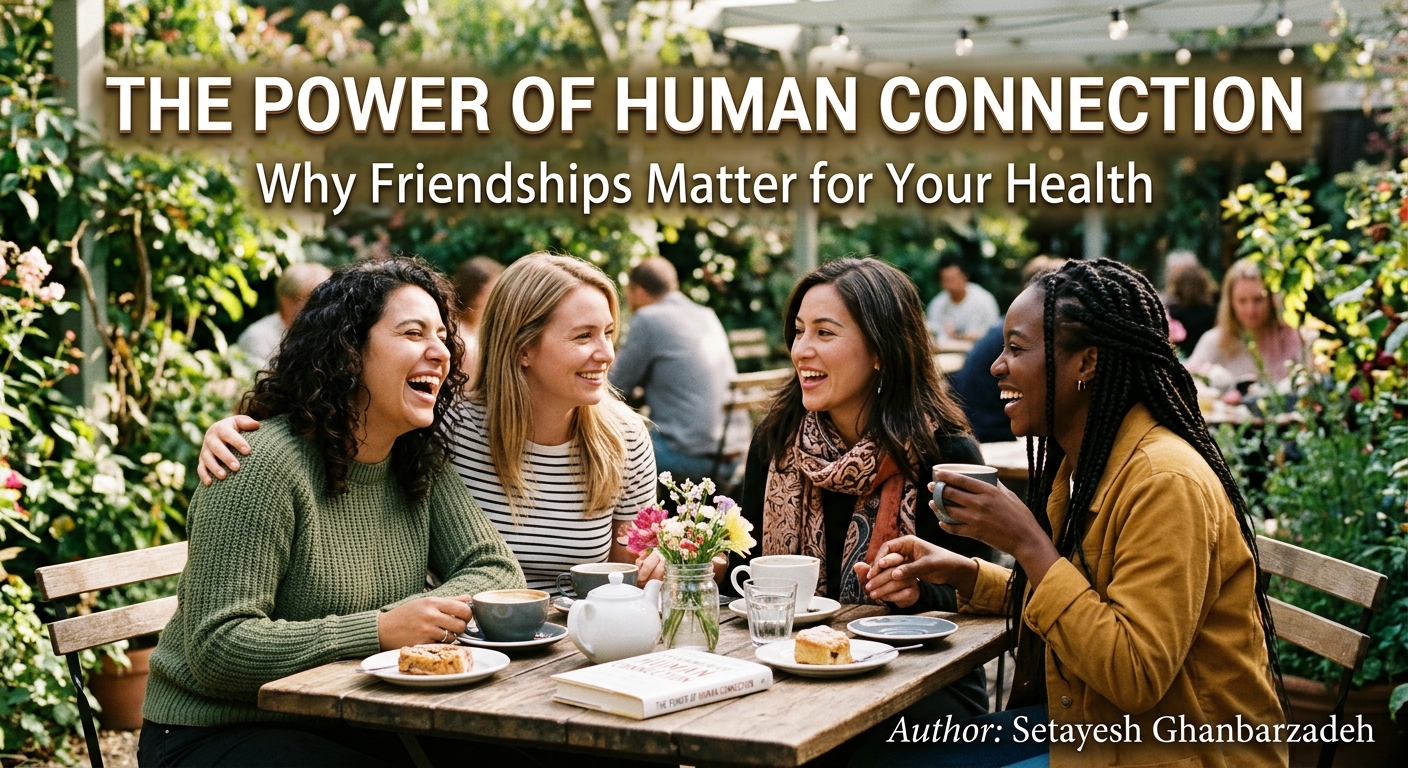
The Power of Human Connection: Why Friendships Matter for Your Health
Author: Setayesh Ghanbarzadeh
Have you ever had a difficult day and felt better simply because a friend listened to you? Sometimes, a short conversation, a supportive message, or spending time with someone we trust can make a bigger difference than we expect.
Friendship is not only an enjoyable part of life. Scientific research shows that meaningful social relationships are also important for our mental and physical health.
Why Do Human Connections Matter?
Humans naturally need social connection. Feeling accepted, supported, and understood helps us develop a sense of belonging.
Positive relationships can provide emotional support during stressful situations, help us feel less alone, and encourage healthier habits.
According to the World Health Organization (WHO), social connection includes the relationships we have, the support we receive, and the quality of our interactions with others.
How Can Friendships Improve Your Health?
1. Better Mental Well-being
Talking to a trusted friend can help us express our emotions and feel understood. Supportive relationships may also help us cope with stress, anxiety, and difficult life experiences.
2. A Healthier Response to Stress
When we face challenges, knowing that someone is available to support us can make stressful situations easier to manage. Friends can offer encouragement, advice, or simply a listening ear.
3. Healthier Everyday Habits
Friends can influence our daily choices. For example, exercising together, preparing healthy meals, or encouraging each other to maintain good routines can support healthier lifestyles.
4. A Sense of Belonging
Being part of a supportive social group can help people feel valued and connected. This is particularly important during adolescence and young adulthood, when relationships and personal identity continue to develop.
The Centers for Disease Control and Prevention (CDC) highlights that social connection is associated with better mental and physical health.
Loneliness: When Connection Is Missing
Loneliness is not necessarily the same as being alone.
A person can have many friends, attend social events, and communicate with others online but still feel lonely. Loneliness is the distressing feeling that the relationships we have do not meet our need for meaningful connection.
According to the WHO’s 2025 information on social connection, approximately one in six people worldwide experience loneliness. Young people are among the groups reporting particularly high levels.
Social isolation and loneliness are associated with increased risks of depression, anxiety, cardiovascular disease, and other health problems.
This shows why meaningful relationships are an important part of public health.
Five Simple Ways to Build Stronger Connections
You do not need hundreds of friends to experience the benefits of social connection. A few meaningful relationships can make a difference.
1. Be Present: When someone is talking to you, listen carefully instead of constantly checking your phone.
2. Reach Out First: Send a message or call a friend you have not spoken to recently.
3. Spend Time Together: Participate in activities such as walking, studying, cooking, or playing sports.
4. Show Appreciation: Small gestures, kind words, and genuine interest can strengthen relationships.
5. Be Open to New Connections: Joining student organisations, volunteering, or attending group activities can create opportunities to meet people with similar interests.
Is Online Friendship Enough?
Technology makes it easier than ever to communicate with people around the world. Social media and messaging applications can help us maintain friendships, especially when distance makes face-to-face meetings difficult.
However, the number of followers or online interactions does not necessarily reflect the quality of our relationships.
What matters most is feeling understood, supported, and valued. Online communication can be meaningful, but it should complement rather than completely replace other forms of social interaction.
Final Thoughts
Friendship is much more than having someone to spend your free time with. Meaningful relationships can support emotional well-being, encourage healthy habits, and help us navigate difficult moments.
In a world where people are increasingly connected through technology, it is important not to forget the value of genuine human interaction.
Take a moment today to contact someone you care about. A simple conversation might mean more than you realise.
Because a healthy life is not only about taking care of yourself; it is also about connecting with others.
References
- World Health Organization (2025). Social Connection.
https://www.who.int/news-room/questions-and-answers/item/social-connection - Centers for Disease Control and Prevention (2024). Health Effects of Social Isolation and Loneliness.
https://www.cdc.gov/social-connectedness/risk-factors/index.html - Centers for Disease Control and Prevention (2024). Social Connection.
https://www.cdc.gov/social-connectedness/about/ - U.S. Surgeon General. Social Connection: The Healing Effects of Social Connection.
https://www.hhs.gov/surgeongeneral/reports-and-publications/connection/index.html