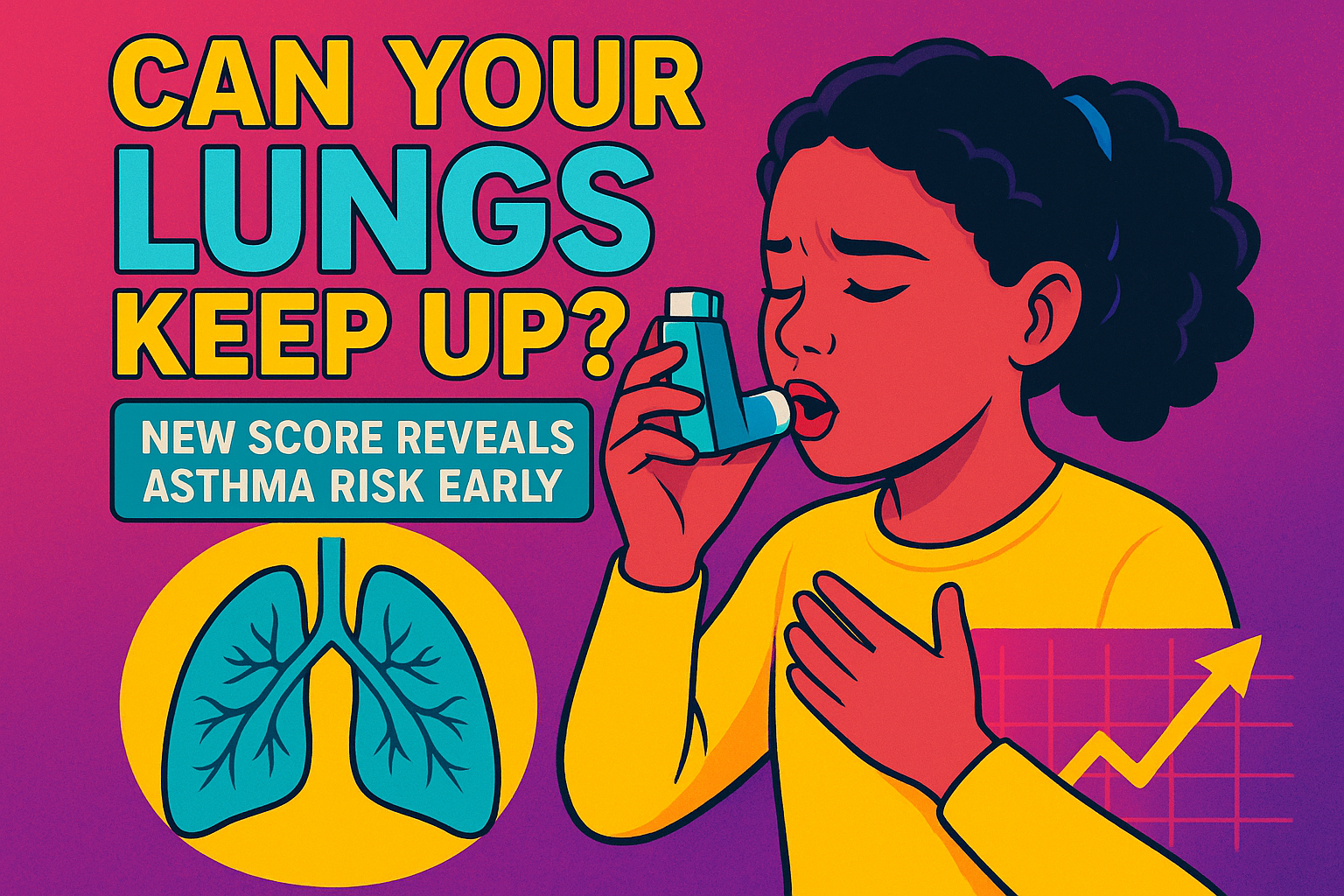
If you or someone you know lives with asthma, you’ve probably heard of lung function tests. These tests measure how well your lungs move air in and out. But what if doctors could use these tests to predict how your lungs will develop over time? That’s exactly what a new study in Pediatric Pulmonology has achieved.
What’s new?
Researchers in France have developed a special calculation called the ‘conditional change score’ for FEV1 — the amount of air you can forcefully exhale in one second. This score helps doctors determine whether a child’s lungs are growing normally, faster than expected, or more slowly, which could cause problems in the future.
Out of nearly 300 children with asthma who were monitored for around six years:
16% showed impaired lung growth, meaning their lungs did not develop as they should have.
Surprisingly, those with stronger lung function at the start were more likely to experience slower growth later on.
The score was also linked with variability in lung function (fluctuations in test results) and body weight (BMI), both of which are key indicators of risk.
Why it matters
Asthma isn’t just about shortness of breath; it’s also about how your lungs develop as you grow. Identifying children early on who might lose lung capacity could enable doctors to adjust treatments sooner and prevent long-term issues in adulthood.
What you can do:
Keep up with your regular lung function tests (spirometry) — they’re more useful than you think!
Manage your triggers, such as smoke, allergens or infections.
Stay active — exercise helps to strengthen the lungs (just check with your doctor about safe levels).
Eat well and maintain a healthy weight, since BMI can influence lung health.
Science is getting better at predicting problems before they start, and this study shows that understanding your body’s data could be the next big step in breathing more easily. 🌬️💙