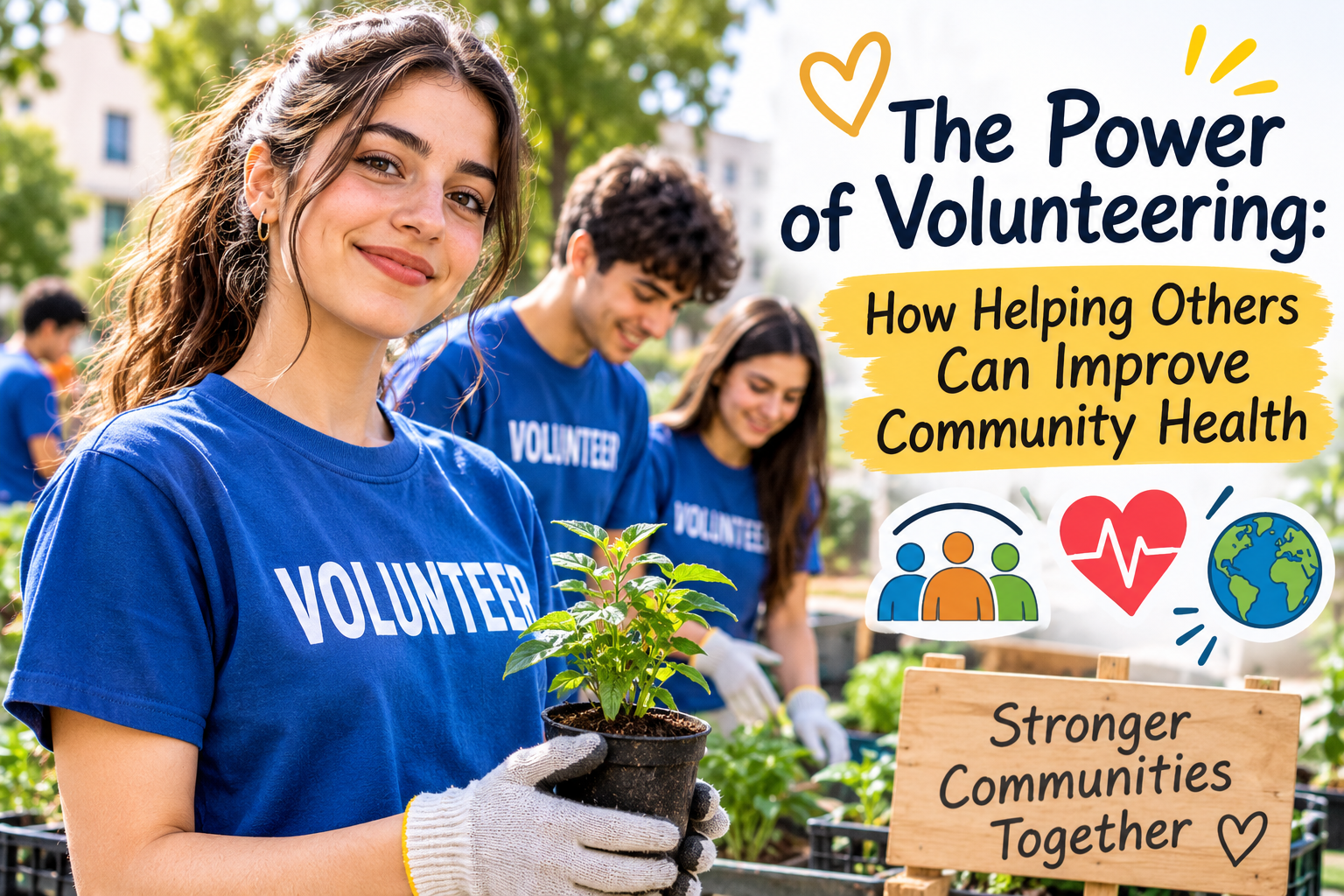
The Power of Volunteering: How Helping Others Can Improve Community Health
Author: Setayesh Ghanbarzadeh
Have you ever helped a classmate understand a difficult subject, joined a neighbourhood clean-up, or donated your time to support someone in need?
These actions may seem small, but they can make a meaningful difference in a community. Volunteering is not only about helping others. It can also create opportunities to meet new people, develop useful skills, and feel more connected to the world around us.
But can helping others actually benefit our health? Research suggests that volunteering may support social connection and aspects of mental and physical wellbeing, although the strength of the evidence varies.
What Is Volunteering?
Volunteering means giving your time, energy, or skills to help other people, an organization, or a community without expecting financial payment.
It can take many forms, such as:
- Helping at a local food bank or charity.
- Supporting environmental projects, such as planting trees or cleaning public spaces.
- Tutoring children or helping other students.
- Visiting older adults or supporting people who experience loneliness.
- Participating in community health campaigns.
- Organizing fundraising events for a meaningful cause.
You do not need special qualifications or a lot of free time to get involved. Even small contributions can support important community activities.
How Can Volunteering Benefit Your Health?
1. Stronger Social Connections
Volunteering brings people together around a shared purpose. It can help you meet individuals from different backgrounds, develop friendships, and feel that you belong to something larger than yourself.
A 2023 umbrella review published in VOLUNTAS examined 28 previous reviews and found evidence that volunteering can support social networks, social integration, and a sense of community.
2. Better Mental Wellbeing
Helping others may provide a sense of purpose, satisfaction, and achievement. It can also create opportunities to focus on meaningful activities and build positive relationships.
Some research has associated volunteering with better psychological wellbeing and fewer depressive symptoms. However, these findings do not prove that volunteering directly prevents or treats mental health conditions.
3. Learning New Skills
Volunteering can help you develop communication, teamwork, leadership, and problem-solving skills.
For young people, these experiences can also provide opportunities to explore career interests and gain practical experience.
4. More Active Community Life
Some volunteering activities involve walking, organizing events, gardening, or working outdoors. These activities can encourage movement and participation in community life.
However, volunteering is not automatically a substitute for regular physical activity or other health-promoting behaviours.
Why Does Community Health Matter?
Health is not only about individual choices. The environment in which people live, study, and work also influences their wellbeing.
Communities with opportunities for social participation, mutual support, and access to resources can help people feel safer and more connected.
For example, a community garden can provide a shared outdoor space, encourage social interaction, and create opportunities to learn about growing food.
Similarly, a student-led health awareness campaign can help people find reliable information about nutrition, physical activity, or mental health.
When people work together, they can contribute to healthier and more supportive environments.
Five Simple Ways to Start Volunteering
You do not need to change your entire schedule to make a difference. Here are five ways to begin:
1. Start With Something You Care About
Choose a cause that matters to you, such as environmental protection, education, animal welfare, or public health.
2. Look for Opportunities Nearby
Check university noticeboards, local charities, community centres, and trusted volunteer organizations.
3. Use Your Existing Skills
If you enjoy writing, help create educational materials. If you are good at a school subject, consider tutoring. If you enjoy organizing, support a community event.
4. Begin With a Manageable Commitment
You could start with one event or a few hours each month. Choose a schedule that fits your studies, work, rest, and personal responsibilities.
5. Work With Others
Joining a group can make volunteering more enjoyable and help you build relationships with people who share your interests.
Can Volunteering Have Disadvantages?
Although volunteering can be rewarding, it is important to recognize that it also requires time and energy.
Taking on too many responsibilities can lead to stress, exhaustion, or burnout. Some activities may also involve emotional challenges, especially when supporting people experiencing difficult situations.
A healthy volunteering experience should include clear responsibilities, appropriate training, support from the organization, and enough time for rest.
Remember: helping others should not mean neglecting your own wellbeing.
Final Thoughts
A healthier community is built through cooperation, compassion, and shared responsibility.
Volunteering offers an opportunity to contribute to something meaningful while developing skills and building social connections. You do not need to make a huge difference in one day. Sometimes, a few hours, a helpful conversation, or a small act of kindness can be a valuable starting point.
The next time you see an opportunity to help, consider getting involved. Your contribution may matter more than you realize.
Scientific References
- Nichol, B., Wilson, R., Rodrigues, A., & Haighton, C. (2023/2024). Exploring the Effects of Volunteering on the Social, Mental, and Physical Health and Well-being of Volunteers: An Umbrella Review. VOLUNTAS: International Journal of Voluntary and Nonprofit Organizations.
https://doi.org/10.1007/s11266-023-00573-z - Nelson, M., et al. (2024). Does Volunteering Support Social Health? Social Connection Guidelines – Evidence Brief.
https://www.socialconnectionguidelines.org/en/evidence-briefs/does-volunteering-support-social-health - Jenkinson, C. E., et al. (2013). Is volunteering a public health intervention? A systematic review and meta-analysis of the health and survival of volunteers. BMC Public Health.
https://doi.org/10.1186/1471-2458-13-773 - Anderson, N. D., et al. (2014). The Benefits Associated With Volunteering Among Seniors: A Critical Review and Recommendations for Future Research. Psychological Bulletin.
https://doi.org/10.1037/a0037610