
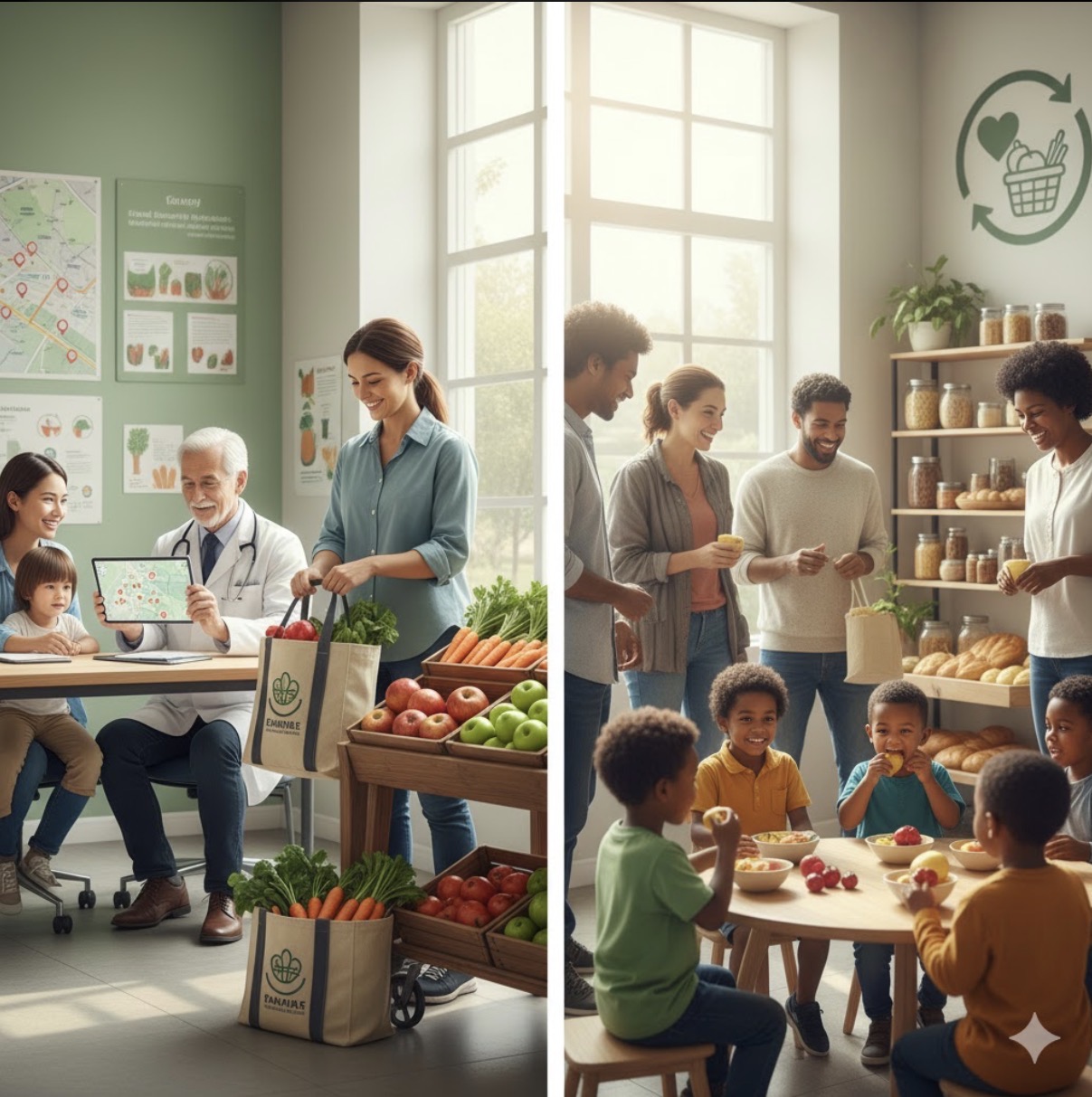
What if your doctor’s office could help fill your fridge, not just your prescriptions?
A new Medscape article shines a light on a game-changing idea: bringing food security specialists directly into clinics to help families access the community resources they need.
We often talk about “healthcare,” but real health starts long before you walk into a hospital. It begins with whether there’s healthy food on the table, safe housing, and access to local support networks. That’s what this new approach targets — turning clinics into community hubs where care goes beyond lab tests and stethoscopes.
In one pediatric clinic, a dedicated food security specialist worked with families struggling to make ends meet. Instead of sending them away with a generic pamphlet, the specialist helped them connect directly to food banks, nutrition programs, and local aid organizations. The results? Families were more likely to access help, children ate healthier, and parents felt supported instead of shamed.
It’s a reminder that health is social. A prescription can’t fix hunger, but a connected community can. When healthcare systems recognize that food insecurity is a medical issue — not just a social one — they start treating people as whole humans.
And here’s the kicker: this kind of community-based care doesn’t just improve lives; it saves money. Fewer ER visits, better nutrition, and stronger families mean a healthier population overall. It’s healthcare that works smarter, not just harder.
So next time you think of a “doctor’s visit,” imagine something bigger — a place where the system actually sees you, not just your symptoms. Because sometimes, the best medicine isn’t found in a bottle — it’s found in a meal shared with dignity.