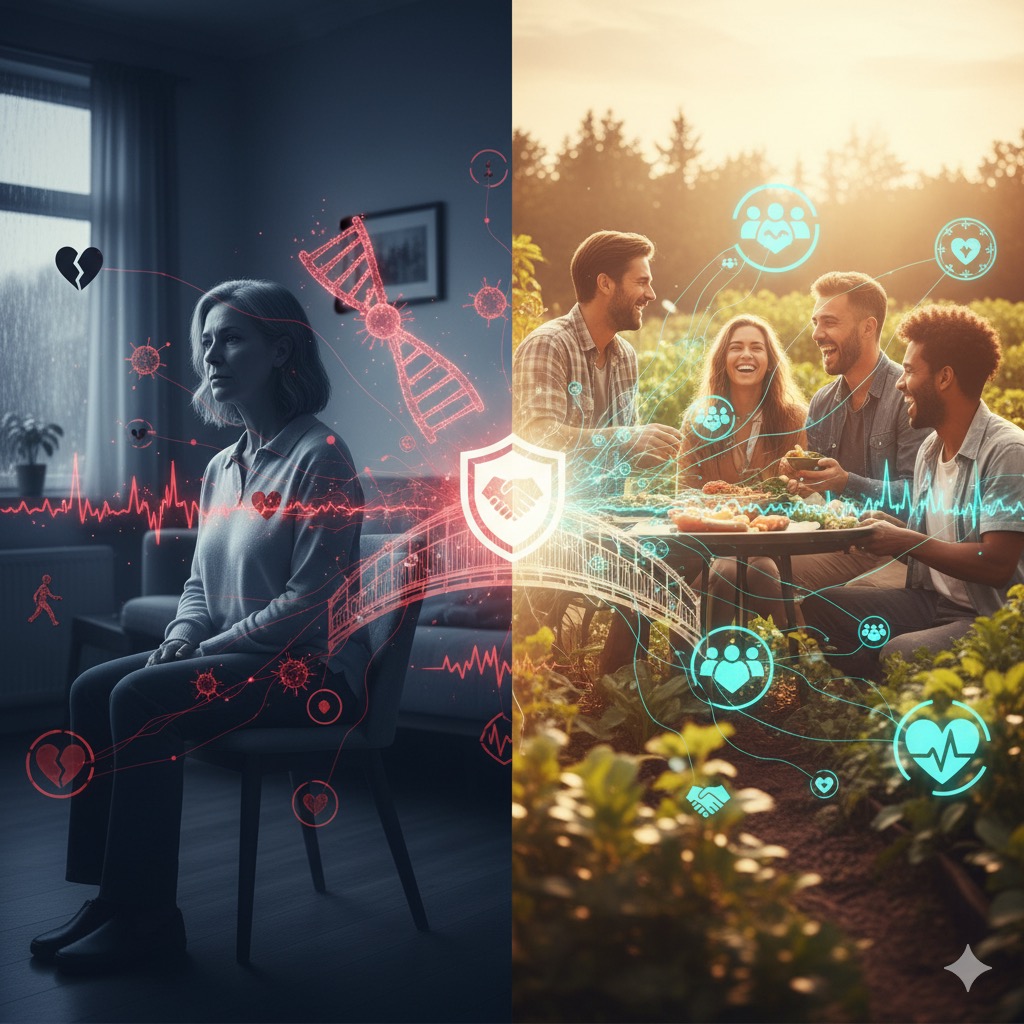
Loneliness and social isolation are more than emotional states—they are emerging as major biological stressors with measurable effects on the body. Research shows that individuals who are chronically lonely or socially isolated exhibit changes in blood proteins and inflammatory markers, suggesting that isolation doesn’t just “feel bad,” it physically affects physiology.
These changes help explain why loneliness is linked to increased risk of cardiovascular disease, diabetes, cognitive decline, and even premature mortality. The body treats social isolation similarly to other recognized health threats—such as smoking or obesity—and its long-term impact is significant.
The good news: awareness is the first step. Addressing loneliness isn’t just about “feeling better”—it’s about improving physical health. Community engagement, meaningful relationships, supportive social networks, and outreach are all part of the solution. When we re‑connect socially, we’re not just giving comfort—we’re giving health.
Takeaway:
Don’t ignore the signals: if you or someone you know is living in isolation, know that it’s not “just how things are.” It’s a risk to the body. Reach out, reconnect, join, share—and help transform isolation into belonging and stronger health.