The Science of Stress: How to Train Your Brain to Stay Calm
Author: Setayesh Ghanbarzadeh
Have you ever felt your heart beating faster before an important exam, a job interview, or a difficult conversation? Have you ever experienced a moment when everything seemed overwhelming, even though you were trying your best to stay calm?
These experiences are connected to stress, a natural response that everyone experiences. However, understanding how stress works can help us develop healthier ways to manage it.
What Exactly Is Stress?
Stress is the physical and mental response of the body to challenging or demanding situations. It can be triggered by many everyday experiences, including academic pressure, financial difficulties, relationship problems, or major life changes.
When we encounter a stressful situation, our body activates its stress response, often called the “fight-or-flight” response. This process involves the release of stress hormones, including adrenaline and cortisol, which prepare the body to react to a potential threat.
As a result, our heart rate and breathing may increase, our muscles become more alert, and our attention focuses on the situation.
Interestingly, stress is not always harmful. Short-term stress can sometimes motivate us to prepare for an examination, meet a deadline, or respond quickly to a challenge.
The problem begins when stress becomes constant and the body has difficulty returning to a relaxed state.
According to the World Health Organization (WHO), prolonged stress can affect both physical and mental well-being.
How Does Stress Affect Your Brain and Body?
Stress does not only influence how we feel emotionally. It can also affect several important functions in our bodies.
1. Memory and Concentration
When stress becomes overwhelming, concentrating and remembering information may become more difficult. This can be particularly challenging for students preparing for examinations.
2. Sleep Problems
Stress can make it harder to fall asleep or maintain good-quality sleep. Poor sleep may then increase stress levels, creating a difficult cycle.
3. Emotional Changes
Long-term stress may contribute to irritability, frustration, sadness, and difficulty managing emotions.
4. Physical Symptoms
Stress can also be associated with headaches, muscle tension, digestive problems, and changes in appetite.
The Centers for Disease Control and Prevention (CDC) explains that prolonged stress can worsen existing health problems and affect everyday functioning.
Can You Train Yourself to Manage Stress Better?
The good news is that healthy coping skills can be learned and practised. You cannot eliminate every stressful situation from your life, but you can develop healthier ways to respond to challenges.
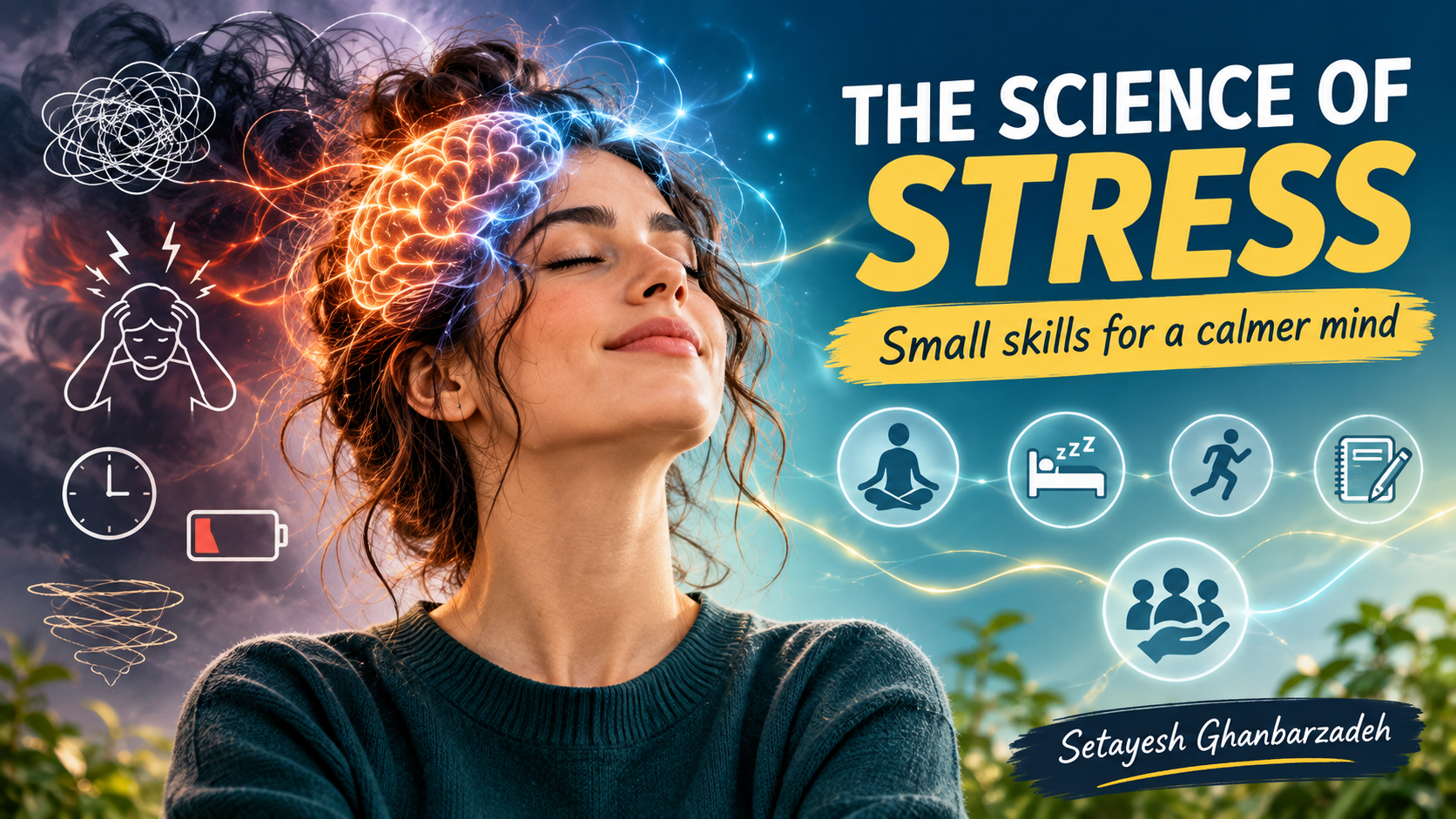
Here are five practical strategies:
1. Practise Deep Breathing
When you feel overwhelmed, take a moment to breathe slowly and comfortably. Focus on your breathing and allow yourself a few minutes to relax.
Relaxation techniques can help activate the body’s natural relaxation response.
2. Move Your Body
Walking, cycling, dancing, or exercising can support emotional well-being. Even short periods of physical activity can be a helpful part of a stress-management routine.
3. Protect Your Sleep
Try to maintain a regular sleeping schedule. Reducing screen time before bedtime and creating a comfortable sleeping environment can also help.
4. Write Down Your Thoughts
Keeping a journal can help you recognise stressful situations, understand your emotions, and identify possible solutions.
Instead of keeping every worry in your mind, try writing down what is bothering you and what you can realistically do about it.
5. Stay Connected With Others
Talking to a trusted friend, family member, or someone you feel comfortable with can make difficult situations easier to manage. Social support is an important part of emotional well-being.
These strategies are consistent with recommendations from the National Institutes of Health and the CDC.
When Should You Ask for Help?
Experiencing stress is normal, but you do not have to manage everything alone.
If feelings of stress or anxiety persist, interfere with your studies, relationships, sleep, or everyday activities, consider speaking with a qualified mental health professional.
Seeking help is not a sign of weakness. It is an important step towards taking care of yourself.
Final Thoughts: You Cannot Control Everything, But You Can Learn to Respond
Life will always include challenges, unexpected changes, and moments of uncertainty. The goal is not to live a completely stress-free life, but to develop the skills and support systems that help you face difficult situations.
Start with small steps: take a deep breath, get enough sleep, move your body, and talk to someone you trust.
Remember, taking care of your mental health is just as important as taking care of your physical health.
A calmer mind starts with understanding yourself.
⸻
References
- World Health Organization (WHO). (2026). Stress.
https://www.who.int/en/news-room/questions-and-answers/item/stress
- National Institute of Mental Health (NIMH). I’m So Stressed Out! Fact Sheet.
https://www.nimh.nih.gov/health/publications/so-stressed-out-fact-sheet
- Centers for Disease Control and Prevention (CDC). (2026). Managing Stress.
https://www.cdc.gov/mental-health/living-with
- National Institutes of Health (NIH). Emotional Wellness Toolkit.
- National Center for Complementary and Integrative Health (NCCIH). 5 Things To Know About Relaxation Techniques for Stress.
https://www.nccih.nih.gov/health/tips/things-to-know-about-relaxation-techniques-for-stress