
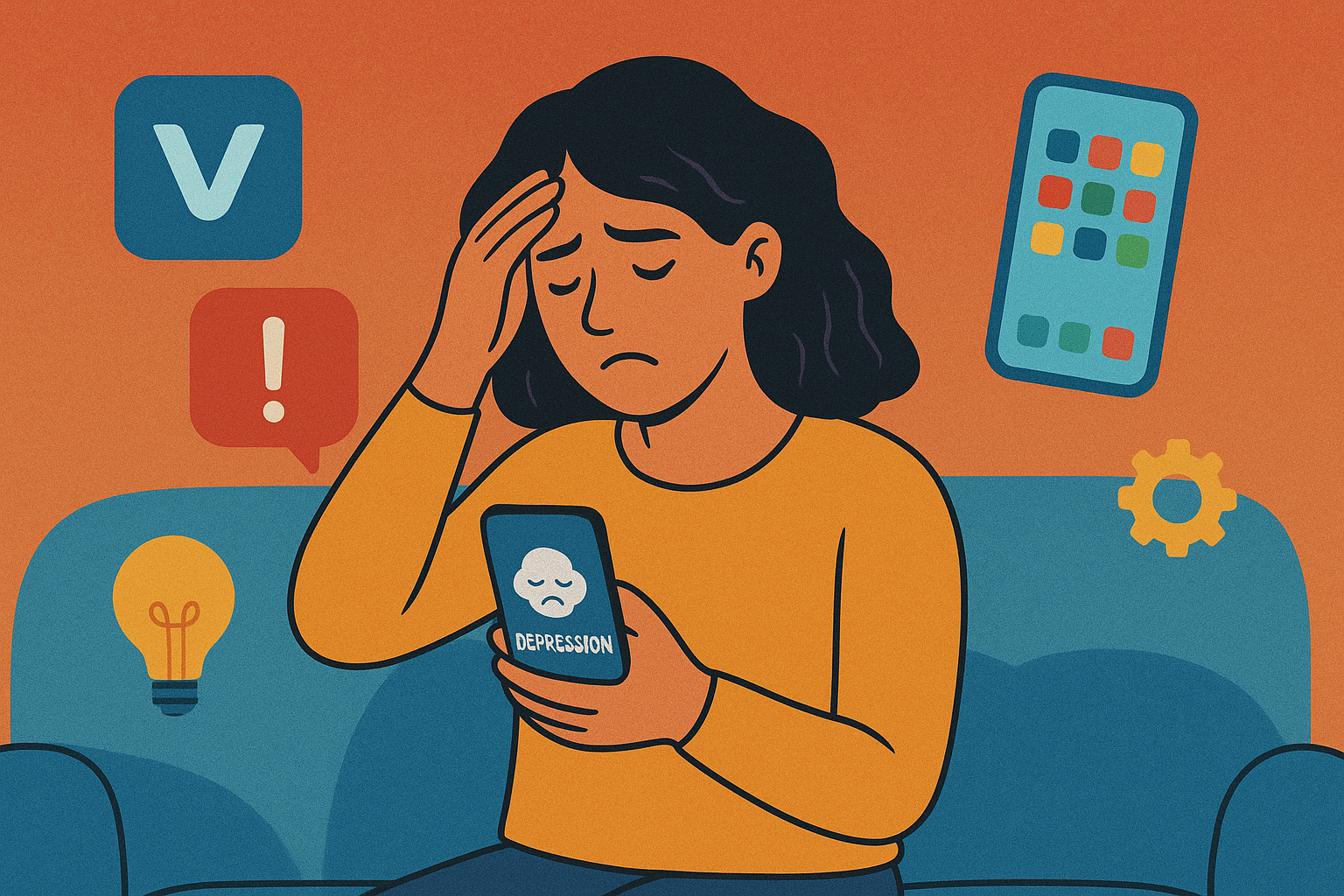
We’ve all heard of apps promised to ease anxiety or stress — but can apps really help people with clinical depression? Recent research says yes, in some ways.
What the Evidence Shows
- A 2023 meta-analysis of 13 randomized trials (over 1,400 people) found that mobile apps alone or along with therapy/meds helped reduce depressive symptoms in moderate-to-severe cases.
- In 2024, Rejoyn, the first FDA-approved prescription app for major depressive disorder, was given the green light. It’s meant to be used with traditional treatment like antidepressants and guidance from a clinician.
- Other apps and tools like MoodMission, RESiLIENT, CBT-based apps, and mindfulness apps are being studied; many show promise.
What to Be Careful With
- Most depression apps are not strictly regulated. Many are marketed as “wellness” tools rather than medical devices, so their claims aren’t always backed by strong proof.
- Engagement drops fast: people often stop using apps within a short time (days or weeks). The design, how interesting or easy an app is, and whether it has human support all matter a lot.
- Ethical and privacy risks exist: Is your data safe? Does the app handle crisis or suicidal thoughts properly? Some apps don’t provide real help or correct hotlines in emergencies.
So What’s the Role of Apps?
They’re not a cure-all, but they can be valuable tools if used smartly:
- As supplements to therapy or medication, not replacements.
- For self-monitoring (tracking moods, sleep, activity) and homework from therapy.
- With clinician oversight—someone to check progress, decide when more help is needed.
- Choosing apps that are evidence-based, updated, with clear privacy policies and emergency/crisis support.
What This Means for You
If you or someone you know is thinking of using a depression or mental wellness app:
- Don’t rely only on the app if depression is severe.
- Talk to a mental health professional and ask about apps they might recommend.
- Check reviews, research, how often the app is updated, how it handles privacy and emergencies.
- Use the app as part of a broader plan: sleep, movement, social support — those are still super important.