Imagine someone suddenly collapses in a public place. Before an ambulance arrives, the people nearby may be the first ones who can help. Knowing what to do in those first few minutes can make a real difference.
A recent study in North Carolina investigated whether better community training and emergency medical services (EMS) could improve survival after an out-of-hospital cardiac arrest.
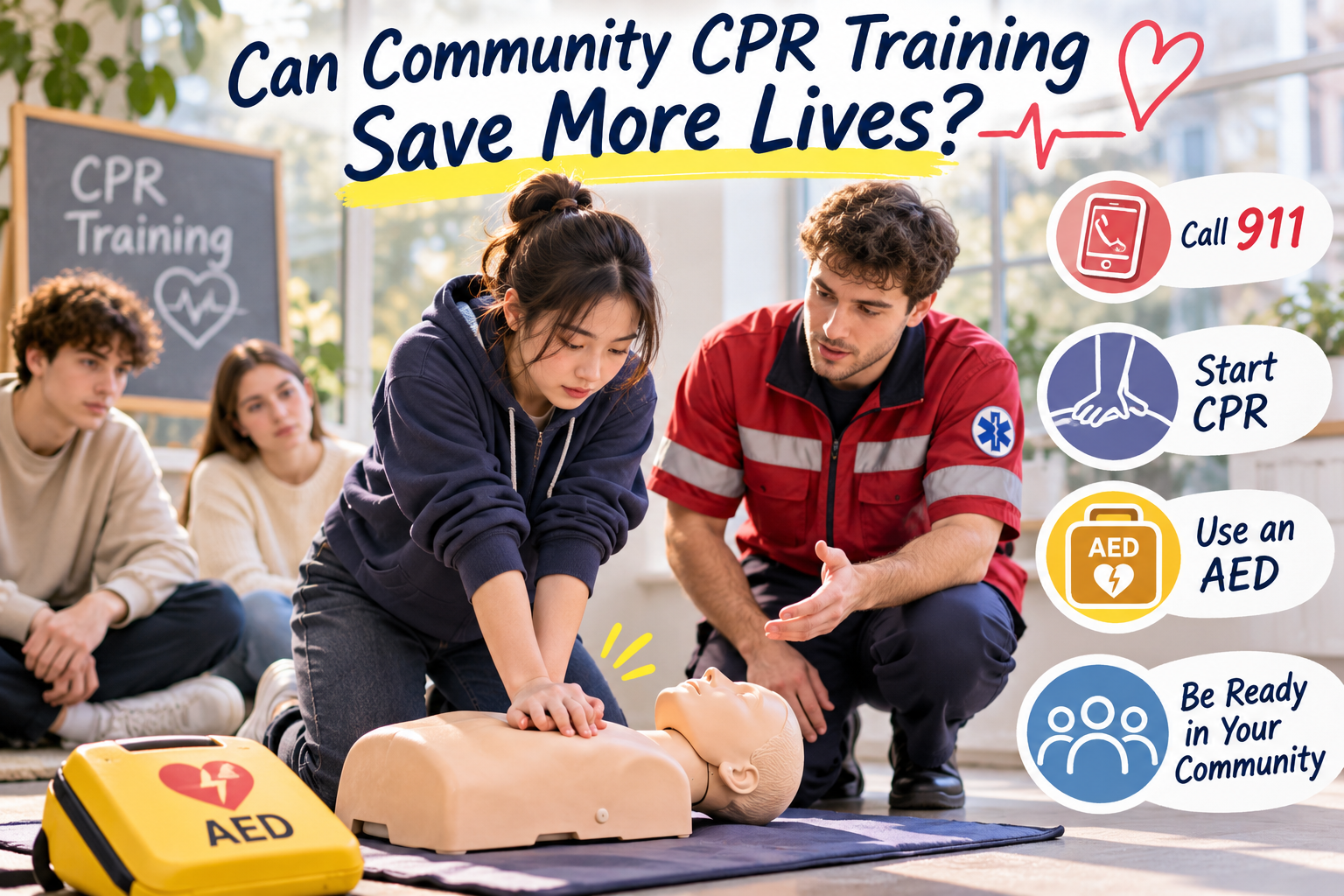
The intervention included four main parts: training 911 operators to recognize cardiac arrest quickly, teaching them to give CPR instructions over the phone, providing CPR training for community members, and improving the use of automated external defibrillators (AEDs) before emergency teams arrived.
The trial included more than 22,000 patients across groups of counties. However, the results were unexpected. Survival to hospital discharge with good neurological function was 9.0% in the intervention group and 9.4% in the usual-care group. The researchers did not find a significant improvement from the combined intervention.
Does this mean CPR training is useless? Definitely not. The study tested whether a large, organized community programme could improve outcomes compared with existing emergency care. It did not test whether CPR itself is effective. Early CPR and defibrillation remain important parts of cardiac arrest response.
So, what can we do? Learning basic CPR, knowing where an AED is located, and understanding how to call emergency services can help us respond instead of simply standing by.
The takeaway: You do not need to be a healthcare professional to help in an emergency. A little preparation can make you a more confident and useful member of your community.
Source: Medscape Medical News
https://www.medscape.com/publichealth?utm_source=chatgpt.com