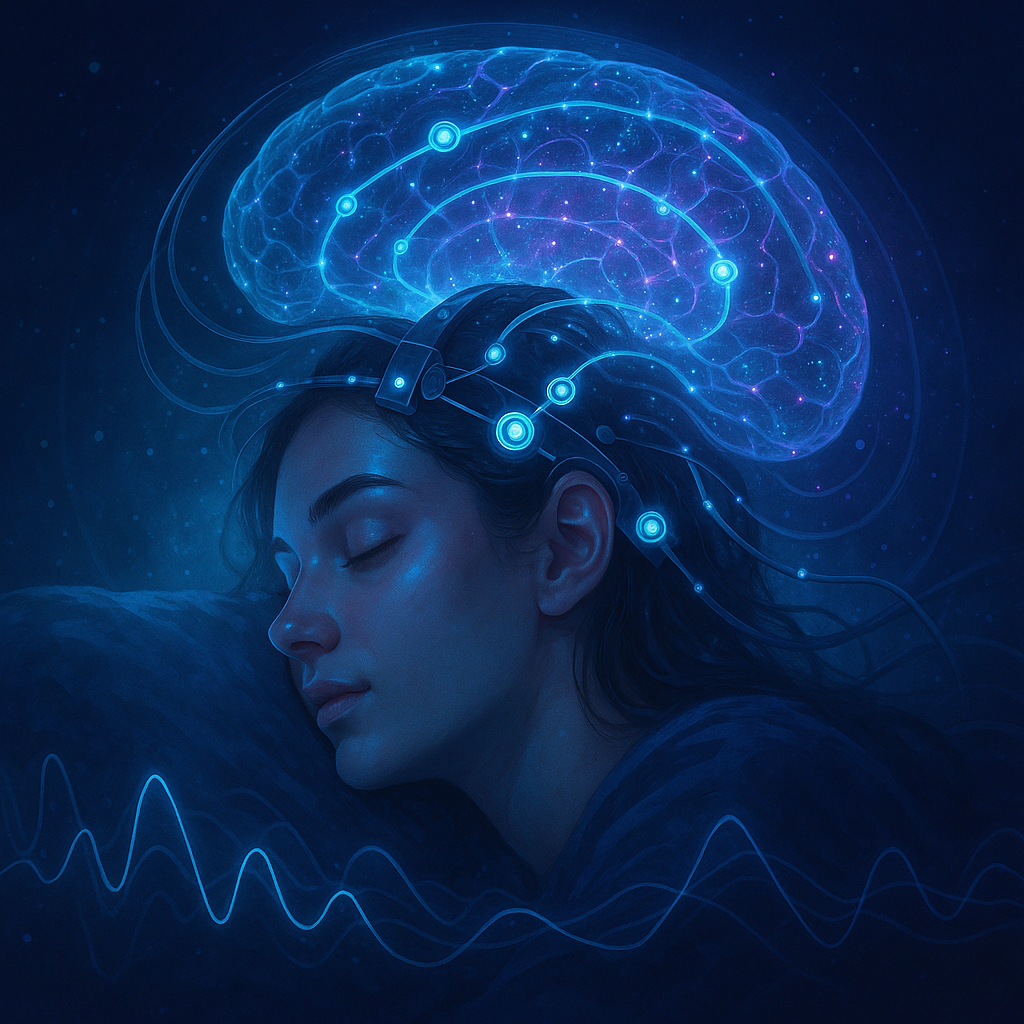
This study investigated why some people remember their dreams after waking up, while others forget them. The researchers focused on brain activity during sleep, especially the patterns of theta and alpha waves, which are types of brain oscillations. The idea was to see if the brain behaves differently during sleep in people who tend to recall dreams compared to those who don’t.
The experiment included healthy young adults who spent a night in a sleep lab. Some of them were known to often remember their dreams (high recallers), while others rarely did (low recallers). During the night, researchers used EEG (electroencephalography) to monitor brain activity, especially just before waking the participants.
They found that people who remembered their dreams had more theta activity in certain parts of the brain during REM sleep the stage of sleep when most vivid dreams occur. Theta waves are often linked to memory and emotional processing. The high dream recallers also showed less alpha activity before awakening. Alpha waves are related to relaxed wakefulness, and lower alpha activity might reflect a brain state that is more “open” to dream experiences.
Importantly, this brain wave pattern was seen before the participants woke up, suggesting that the ability to remember dreams is related to the way the brain functions during sleep, not just what happens after waking. The study also found differences in sleep structure: high recallers had more awakenings and lighter sleep, which might give them more chances to remember dreams.
The researchers concluded that remembering dreams is not just about attention or trying harder to recall they believe it’s partly due to differences in how the brain processes information during sleep. Dream recall may be linked to how the sleeping brain stores or prepares to retrieve memories.
This research is important because it connects sleep-related brain activity with memory and awareness. It could also help us understand more about how the sleeping brain works, and how memory systems function in unconscious states.
In short, the study shows that brain waves especially theta and alpha rhythms play a key role in whether we remember our dreams or not. People who recall dreams have a unique pattern of brain activity during sleep that may support memory and attention to internal experiences.