The 2025 Nobel Prize: Discovering the Immune System’s ‘Brake’
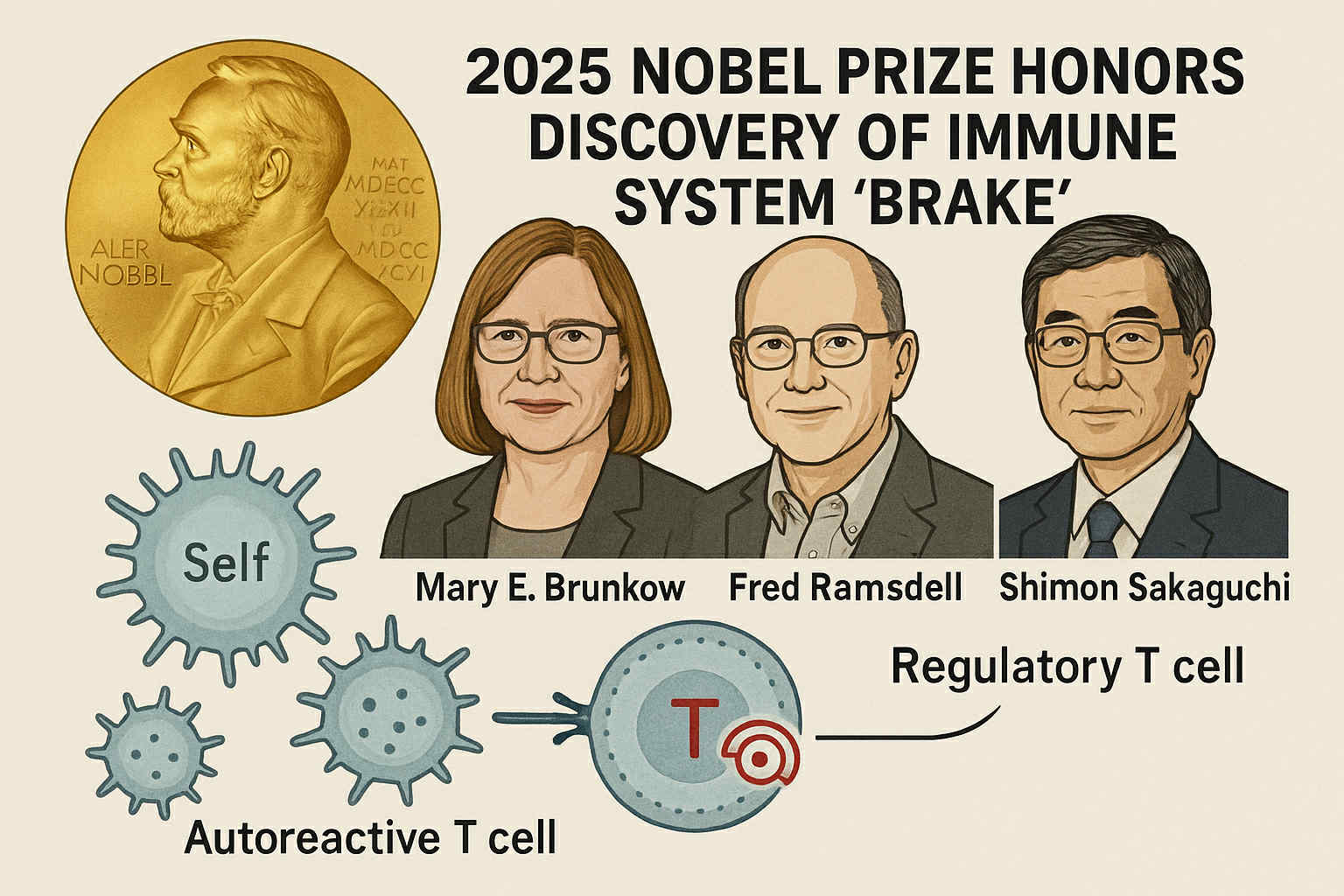
The 2025 Nobel Prize in Physiology or Medicine celebrates a breakthrough that demonstrates the intelligence of our bodies. Three scientists — Mary E. Brunkow, Fred Ramsdell and Shimon Sakaguchi — discovered how our immune system knows when to fight and when to rest.
Our immune system is designed to destroy harmful invaders such as viruses and bacteria, but what if it started to attack us? This is what happens in autoimmune diseases such as type 1 diabetes, multiple sclerosis and rheumatoid arthritis. The key question has always been how the body normally avoids this kind of self-destruction.
These researchers found the answer in a special type of immune cell called regulatory T cells, or Tregs — the body’s own peacekeepers. Tregs act as brakes on the immune system, ensuring that defence does not turn into friendly fire.
Brunkow and Ramsdell discovered the key gene behind Tregs, FOXP3. Without this gene, the immune system can spiral out of control.
Sakaguchi identified these “guardian” cells decades ago, demonstrating that autoimmune diseases erupt when they’re missing.
Their work connected genetics, cell biology and clinical medicine, turning a mystery into a map for new treatments.
Why it matters:
-In autoimmune diseases, boosting Tregs could help calm the immune system.
-In cancer, switching off Tregs could enable the body to attack tumours more effectively.
-In transplants, Tregs could facilitate the safe acceptance of new organs.
This discovery not only explains how we stay healthy, but is also changing the way doctors think about controlling the immune system. As the Nobel Committee put it, these scientists revealed ‘how life stays in balance’. 🌍✨