Originally introduced as a low-cost, accessible way to detect breast cancer early, breast self-exams (BSEs) have evolved into a broader concept known as breast self-awareness. While some health organizations no longer recommend formal BSEs, they still emphasize the importance of knowing what’s normal for your body
Steps to Perform a Breast Self-Examination
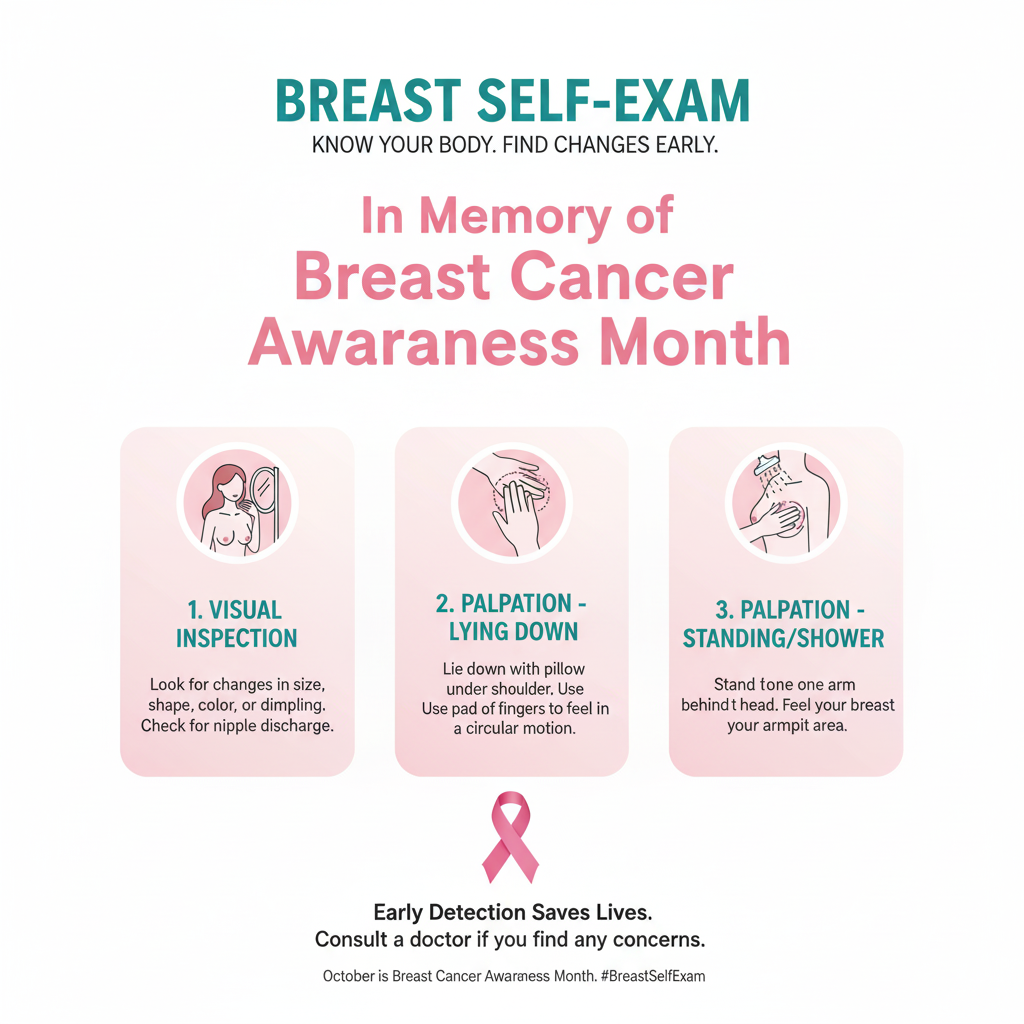
- Visual Inspection: Stand in front of a mirror with your shoulders straight and your arms on your hips. Look for any changes such as dimpling, redness, or changes in the shape or size of your breasts.
- Physical Examination: Lie down and use your right hand to feel your left breast and vice versa. Use the pads of your fingers to move around the breast in a circular motion, covering the entire breast area and armpit.
- Check for Discharge: Gently squeeze each nipple to check for any discharge, other than breast milk.
Performing BSE monthly, ideally a few days after your period ends, can help you detect any unusual changes early. If you notice any changes, consult a healthcare professional promptly.