Can You Trust Health Advice on TikTok? How to Spot Medical Misinformation Online
Author: Setayesh Ghanbarzadeh
Introduction
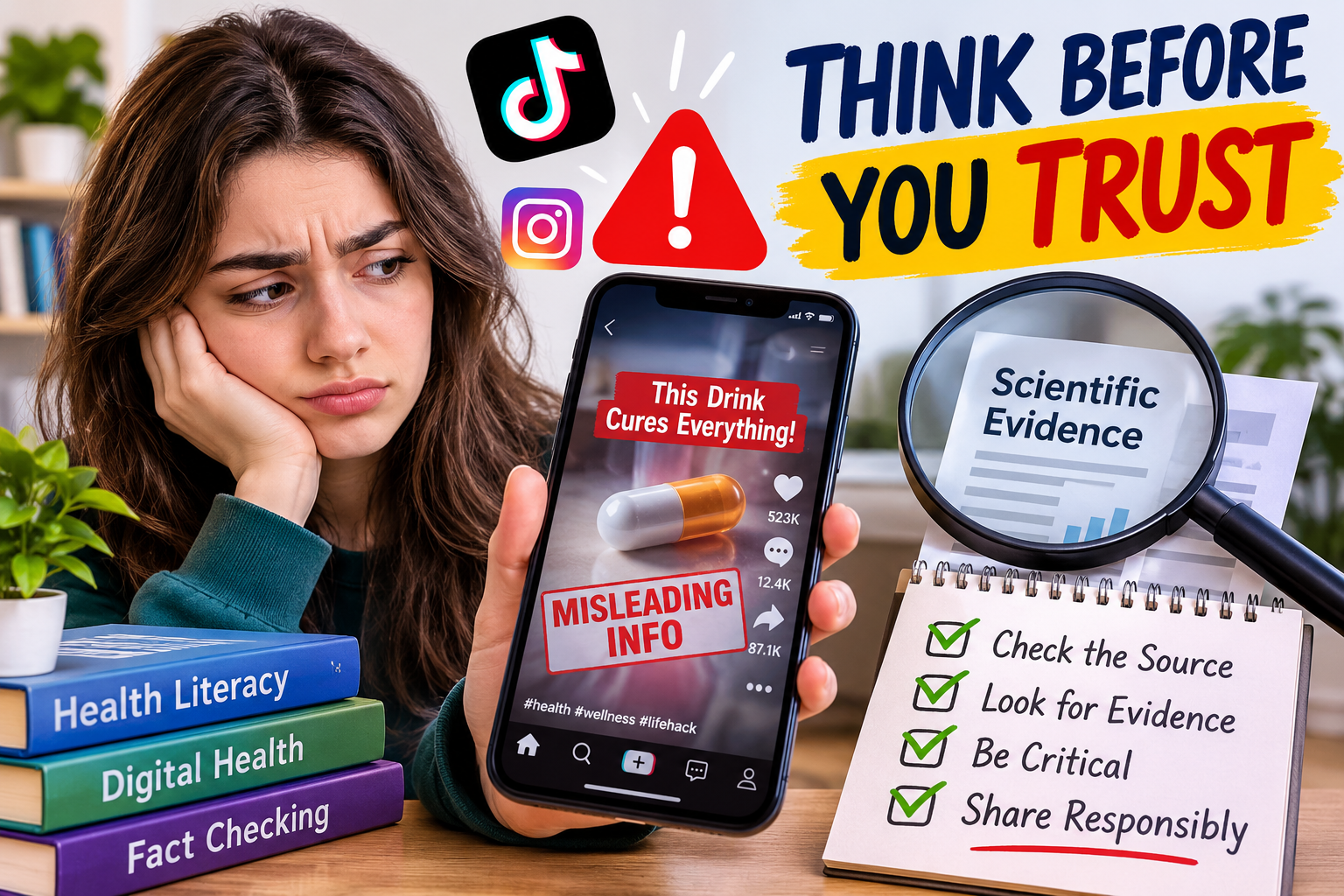
Imagine scrolling through TikTok or Instagram when you suddenly see a video claiming that a simple drink can cure acne, a popular supplement can eliminate anxiety, or a certain food can prevent every disease.
The video looks professional, has thousands of likes, and the creator sounds confident. Would you trust it?
Social media has made health information easier to access than ever before. It can help people learn about healthy habits, understand medical conditions, and discover helpful resources. However, not everything shared online is accurate.
Learning how to recognise misleading health information is an important part of digital health literacy.
1. Why Does Health Misinformation Spread So Easily?
Short videos and posts are designed to attract attention. Dramatic headlines, emotional stories, and surprising claims can encourage people to watch, comment, and share.
Unfortunately, popular content is not necessarily reliable content.
A creator may share personal experiences rather than scientific evidence. Another may promote a product while presenting advertising as medical advice.
The World Health Organization (WHO) explains that health misinformation can influence people’s decisions and create risks for both individuals and communities.
2. Five Warning Signs of Unreliable Health Advice
Before believing a health-related post, look for these warning signs:
1. It promises a miracle cure.
Be careful with claims such as “This one trick cures every illness” or “You will never need medication again.” Real healthcare is rarely that simple.
2. It has no reliable sources.
Trustworthy health information should explain where its claims come from. Look for links to scientific research or recognised health organisations.
3. The creator is selling something.
If someone recommends a supplement, diet, or treatment while encouraging you to buy their product, consider whether financial interests may influence the advice.
4. It uses fear or extreme language.
Statements such as “Doctors don’t want you to know this” or “This everyday food is secretly killing you” are reasons to investigate further.
5. The information is outdated.
Medical knowledge changes as new research becomes available. Always check when the information was published or reviewed.
3. The Five-Question Health Information Check
The US National Center for Complementary and Integrative Health (NCCIH) recommends asking critical questions when evaluating health information on social media.
Try this simple checklist:
- Who created it? Is the person or organisation qualified to discuss the topic?
- What is being promised? Does the claim sound too good to be true?
- When was it published? Is the information still current?
- Where is the evidence? Are scientific studies or trusted sources provided?
- Why was it created? Is the purpose to educate, entertain, or sell something?
These questions can help you pause and think before accepting or sharing a claim.
4. Where Can You Find Reliable Health Information?
If a video makes you curious about a health topic, do not stop at the video itself. Check the information using trusted sources.
Useful places to start include:
- World Health Organization (WHO): International health information and public health guidance
- National Health Service (NHS): Accessible information about symptoms, conditions, and treatments
- MedlinePlus: Reliable consumer health information from the US National Library of Medicine
- Centers for Disease Control and Prevention (CDC): Evidence-based information about diseases and prevention
You can also ask a qualified healthcare professional if you are unsure whether information applies to your personal situation.
5. Think Before You Share
Sharing a misleading health post can spread confusion beyond your own social media account.
Before forwarding a video or recommending a treatment to friends, take a moment to check its original source. If you cannot verify the claim, it is better not to share it as fact.
Most importantly, never stop prescribed medication, start a treatment, or make a major health decision based only on a social media post.
Final Thoughts
Social media is not automatically bad for your health. It can be a useful place to discover information, hear different experiences, and connect with health communities.
The important thing is to stay curious without believing everything you see.
Remember: a million views do not make medical advice scientifically correct. Your health deserves more than a viral video.
Pause. Check the evidence. Think critically. Share responsibly.
References
- World Health Organization (WHO). Disinformation and Public Health.
https://www.who.int/news-room/questions-and-answers/item/disinformation-and-public-health - National Center for Complementary and Integrative Health (NCCIH). How to Know If Health Information on Social Media Is Accurate.
https://www.nccih.nih.gov/health/know-science/finding-and-evaluating-online-resources/finding-health-information-on-social-media/how-to-know-if-health-information-on-social-media-is-accurate - MedlinePlus. Evaluating Health Information.
https://medlineplus.gov/evaluatinghealthinformation.html - National Institute on Aging (NIA). How to Find Reliable Health Information Online.
https://www.nia.nih.gov/health/how-find-reliable-health-information-online