
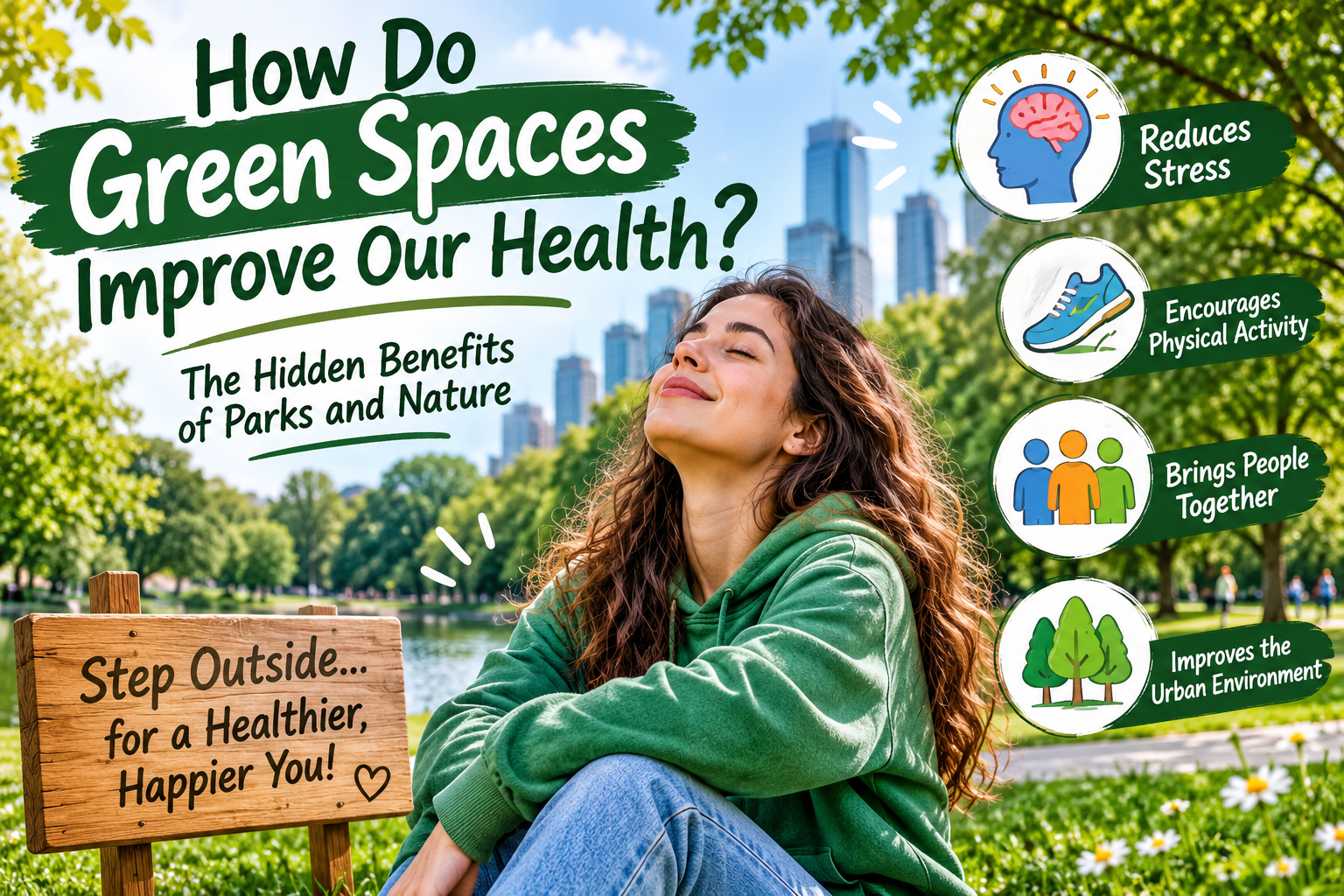
How Do Green Spaces Improve Our Health? The Hidden Benefits of Parks and Nature
Author: Setayesh Ghanbarzadeh
Introduction
Imagine spending an entire day studying, working, or scrolling through your phone. Now imagine taking a short walk in a park, sitting under a tree, or enjoying the fresh air surrounded by nature.
It may seem like a small change, but spending time in green spaces can be an important part of a healthier lifestyle.
Urban green spaces include public parks, gardens, tree-lined streets, playgrounds, and other natural areas in cities. They are not just beautiful places. They can also support physical health, mental well-being, and stronger communities.
So, how does nature make a difference to our health?
1. Nature Can Help Reduce Stress
Have you ever felt calmer after walking through a park or sitting somewhere surrounded by trees?
Research suggests that spending time in natural environments can support psychological relaxation and help reduce feelings of stress.
A 2025 review published in Nature Cities, which examined hundreds of studies, found that exposure to urban nature was associated with improvements in several mental health outcomes, including mood and psychological well-being.
Although nature is not a replacement for professional mental health care, it can be a valuable part of everyday self-care.
2. Green Spaces Encourage Physical Activity
Parks make it easier and more enjoyable to move your body.
Instead of exercising indoors, people can walk, run, cycle, play sports, or simply explore outdoor spaces.
Regular physical activity supports heart health, strengthens muscles and bones, and contributes to overall well-being.
Green spaces can make exercise feel less like a task and more like an enjoyable part of the day.
3. Parks Bring People Together
Health is not only about our bodies and minds. Our social relationships matter too.
Public parks create opportunities for people to meet, spend time together, and participate in community activities.
For example:
- Friends can meet for a walk or picnic.
- Families can spend time outdoors together.
- Neighbours can join community gardening projects.
- Young people can participate in outdoor sports and events.
These activities can encourage social interaction and help people feel more connected to their communities.
4. Green Spaces Can Improve the Urban Environment
Cities can become hot, noisy, and crowded. Trees and other vegetation can help make urban environments more comfortable.
Green spaces may:
- Provide shade and help reduce the effects of excessive heat.
- Reduce exposure to some environmental pollutants.
- Help soften traffic and urban noise.
- Create pleasant spaces for outdoor activities.
The World Health Organization highlights these environmental benefits as important pathways through which urban green spaces can support health.
5. How Can You Bring More Nature Into Your Routine?
You do not need to live near a forest or spend hours outdoors to enjoy some of the benefits of nature.
Here are five simple ideas:
- Take a short park walk: Try replacing part of your usual screen time with a walk outdoors.
- Study outside: If the weather and environment are suitable, take your books to a quiet green space.
- Meet friends outdoors: Suggest a walk or picnic instead of always meeting indoors.
- Try gardening: Growing a small plant at home or joining a community garden can be a rewarding activity.
- Explore your neighbourhood: Look for nearby parks, gardens, or tree-lined streets you have never visited.
Remember that the quality, accessibility, and safety of green spaces matter. Not everyone has equal access to clean and welcoming outdoor areas, which makes green-space planning an important community health issue.
Final Thoughts
Green spaces are much more than decorations in our cities. They can encourage movement, support mental well-being, create opportunities for social connection, and improve the urban environment.
You do not need to make a dramatic lifestyle change. Sometimes, a short walk under the trees is a simple way to reconnect with your surroundings.
Step outside, explore your local green spaces, and make room for nature in your everyday life!
References
- World Health Organization Regional Office for Europe. (2016). Urban Green Spaces and Health.
https://www.who.int/europe/publications/i/item/WHO-EURO-2016-3352-43111-60341 - Acute mental health benefits of urban nature. (2025). Nature Cities.
https://doi.org/10.1038/s44284-025-00286-y - Lopez-Haro, J., et al. (2024). Association between Active Use of Urban Green Spaces and Well-Being in Adults Aged 18–65 Years: A Systematic Review. Journal of Health and Pollution.
https://doi.org/10.1289/JHP1040 - World Health Organization Regional Office for Europe. (2023). How can we assess the benefits of urban nature?
https://www.who.int/europe/news/item/22-05-2023-how-can-we-assess-the-benefits-of-urban-nature