
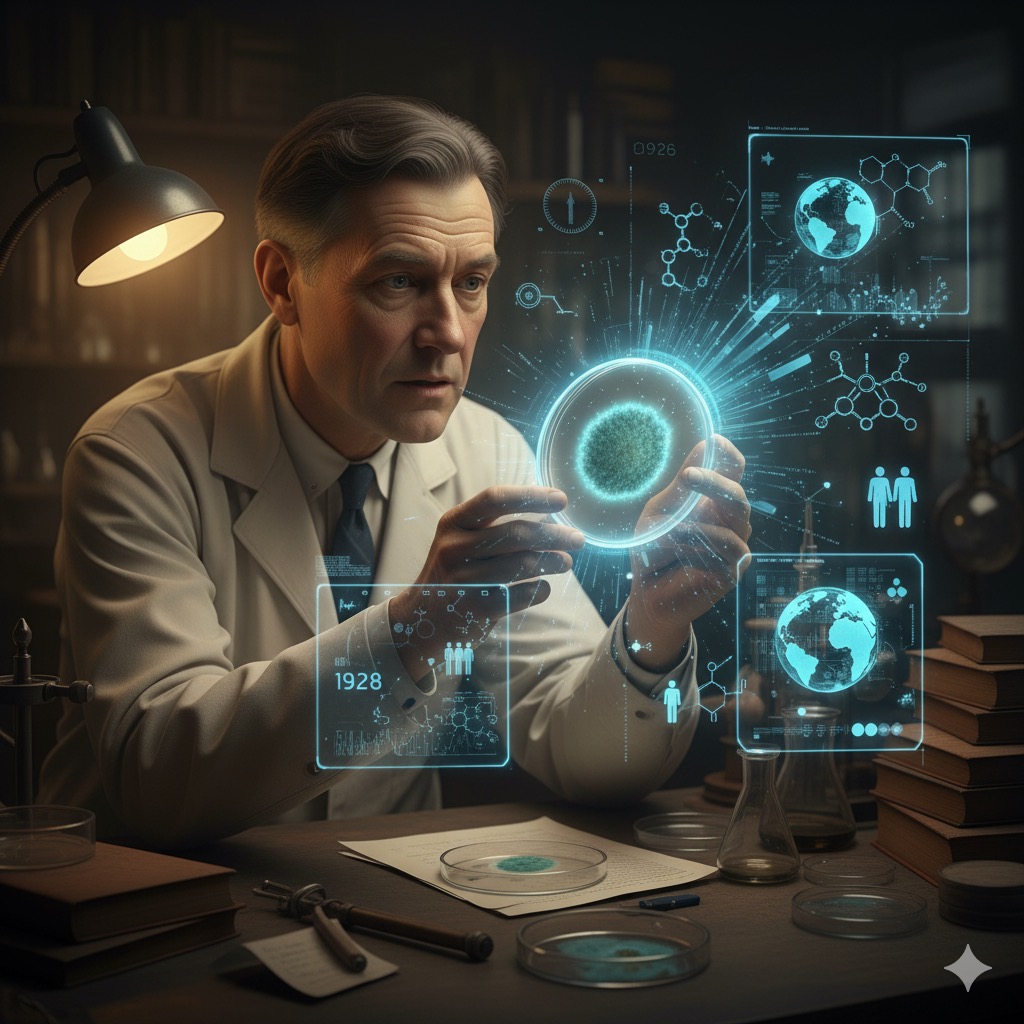
In 1928, Alexander Fleming made one of the most important accidental discoveries in medical history. While studying Staphylococcus bacteria, he noticed that a mold called Penicillium notatum had contaminated one of his petri dishes and was killing the surrounding bacteria.
This unexpected observation led to the development of penicillin, the world’s first widely used antibiotic. Penicillin revolutionized medicine by providing an effective treatment for bacterial infections that were previously often fatal, saving millions of lives.
The discovery of penicillin highlights how curiosity, careful observation, and openness to unexpected results can lead to breakthroughs that change the course of human health.
Fun Fact: Fleming almost threw away the contaminated dish, but his keen eye and scientific curiosity turned a simple accident into a life-saving medical revolution.