The Art of Saying No: Why Healthy Boundaries Matter in Relationships
Author: Setayesh Ghanbarzadeh
Introduction
Have you ever agreed to meet a friend when you really needed to rest? Or accepted an extra responsibility because you were afraid someone might be disappointed if you said no?
Many people find it difficult to say no. They may worry about hurting someone’s feelings, starting an argument, or being seen as selfish.
But healthy relationships do not require us to agree with everything. They need respect, honesty, communication, and an understanding of each person’s limits.
This is where personal boundaries become important.
1. What Are Personal Boundaries?
Personal boundaries are limits that help us communicate what feels comfortable and acceptable to us.
They can involve different parts of life:
- Emotional boundaries: Choosing what personal topics you feel comfortable discussing
- Time boundaries: Protecting time for studying, resting, and personal activities
- Physical boundaries: Communicating preferences about personal space and physical contact
- Digital boundaries: Deciding when you are available online and what personal information you share
According to the American College of Obstetricians and Gynecologists, healthy boundaries help people protect themselves while respecting the needs and limits of others.
2. Why Are Boundaries Important in Relationships?
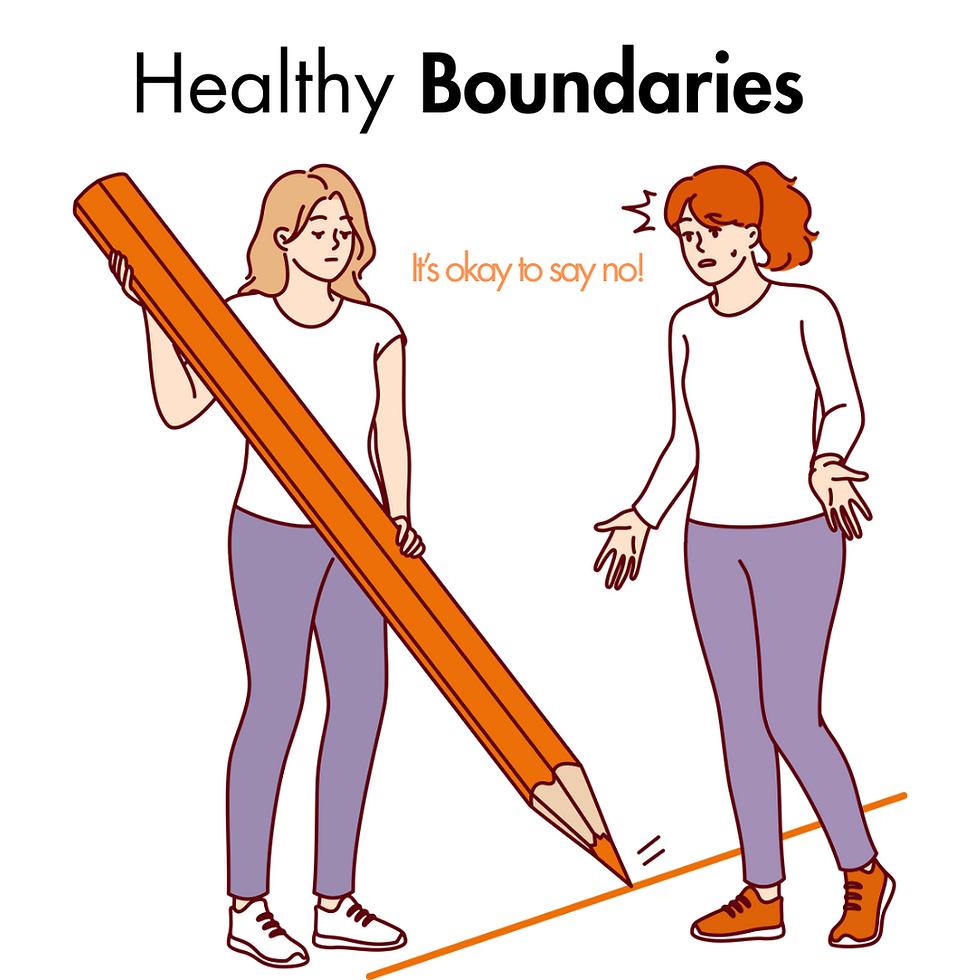
Boundaries are not walls that keep people away. They are guidelines that help relationships become more respectful and balanced.
Healthy boundaries can help you:
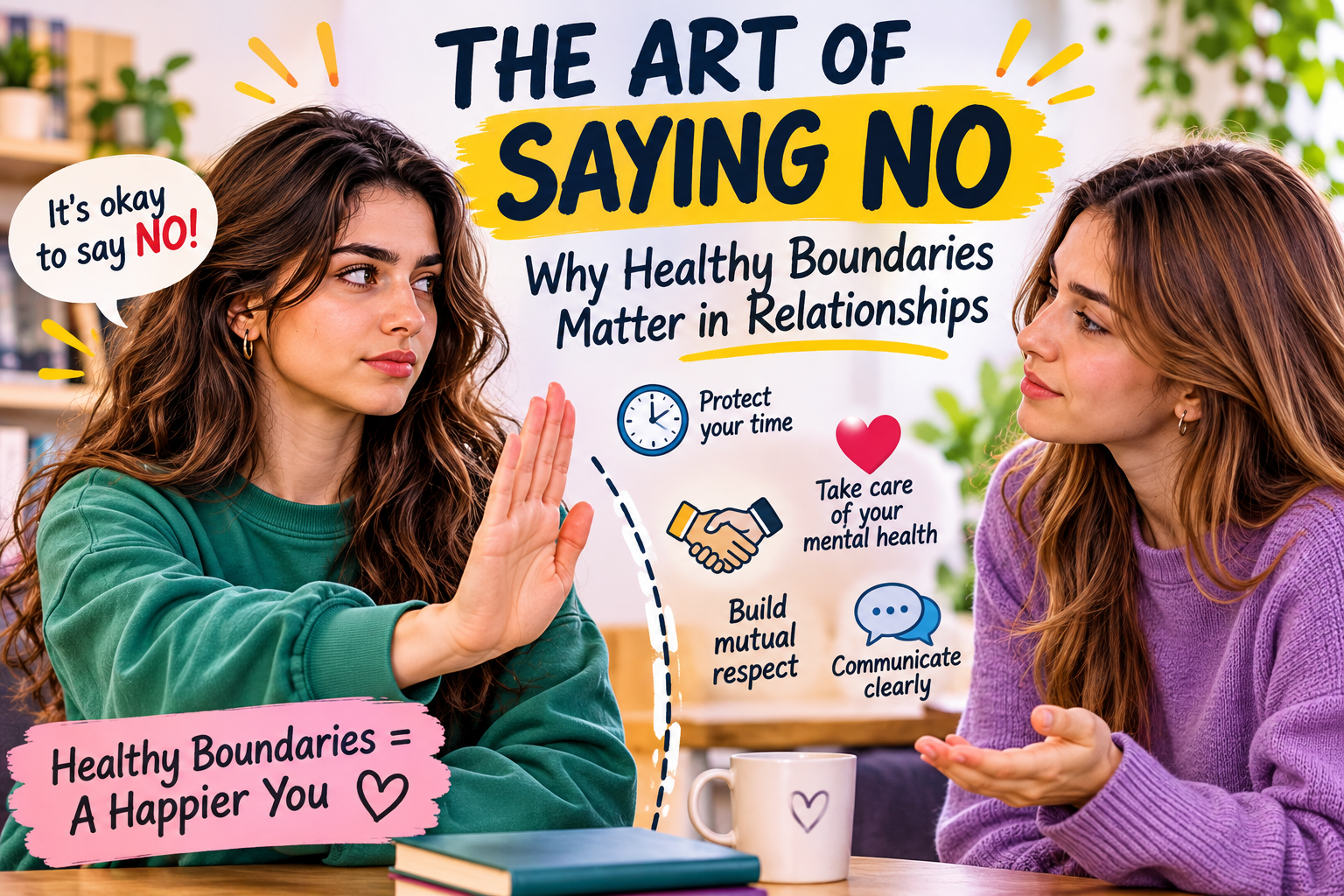
Build mutual respect: Both people understand that their feelings, choices, and comfort matter.
Reduce unnecessary stress: You are less likely to take on responsibilities that overwhelm you.
Communicate honestly: Instead of hiding frustration, you can explain what you need.
Maintain your individuality: You can enjoy close relationships while keeping your own interests, friendships, and personal time.
The NHS also highlights open communication, respect, and support as important parts of healthy relationships.
3. Why Is Saying No Sometimes So Difficult?
There are many reasons why saying no can feel uncomfortable.
You might:
- Fear disappointing someone you care about
- Worry that a friend will become angry
- Feel responsible for solving everyone’s problems
- Want to avoid conflict
- Believe that being a good friend means always being available
However, constantly ignoring your own needs can leave you feeling exhausted or frustrated.
Saying no to a request does not mean rejecting the person. It means being honest about what you can or cannot do.
4. How to Say No Without Being Rude
You can communicate boundaries in a kind and respectful way. Here are five practical examples:
1. Be clear and direct.
Try: “Thank you for asking, but I can’t do that today.”
2. Use honest explanations.
Try: “I need some time to focus on my studies, so I won’t be able to meet tonight.”
3. Avoid over-apologising.
You can be polite without giving a long explanation for every decision.
4. Suggest another option when appropriate.
Try: “I can’t help this evening, but I might have time tomorrow.”
5. Stay consistent.
If you have communicated a boundary, try to maintain it respectfully rather than agreeing because of pressure.
Assertive communication means expressing your needs clearly while also respecting other people’s rights and feelings. The Mayo Clinic identifies assertiveness as a skill that can help people communicate better and manage stress.
5. Remember That Boundaries Go Both Ways
Healthy relationships are not only about asking others to respect your limits. They also require you to respect theirs.
If a friend says they need time alone, try not to take it personally. If someone does not want to discuss a particular subject, respect their choice.
A healthy relationship allows both people to feel comfortable expressing their needs without fear, pressure, or punishment.
If someone repeatedly ignores your boundaries, pressures you, threatens you, or makes you feel unsafe, consider speaking with someone you trust or seeking professional support.
Final Thoughts
Learning to say no can take practice, especially if you are used to putting everyone else’s needs first.
But remember: you can care about someone and still need personal space. You can be a supportive friend without being available every moment. You can respect others without forgetting yourself.
A healthy relationship does not ask you to lose yourself. It gives both people room to be themselves.
References
- American College of Obstetricians and Gynecologists (ACOG). Healthy Relationships.
https://www.acog.org/womens-health/faqs/healthy-relationships - NHS. Maintaining healthy relationships and mental wellbeing.
https://www.nhs.uk/every-mind-matters/lifes-challenges/maintaining-healthy-relationships-and-mental-wellbeing/ - Mayo Clinic. (2024). Being assertive: Reduce stress, communicate better.
https://www.mayoclinic.org/healthy-lifestyle/stress-management/in-depth/assertive/art-20044644 - National Alliance on Mental Illness (NAMI). Setting Boundaries Guide.
https://www.nami.org/wp-content/uploads/2024/08/BTS-Setting-Boundries-Guide.pdf