
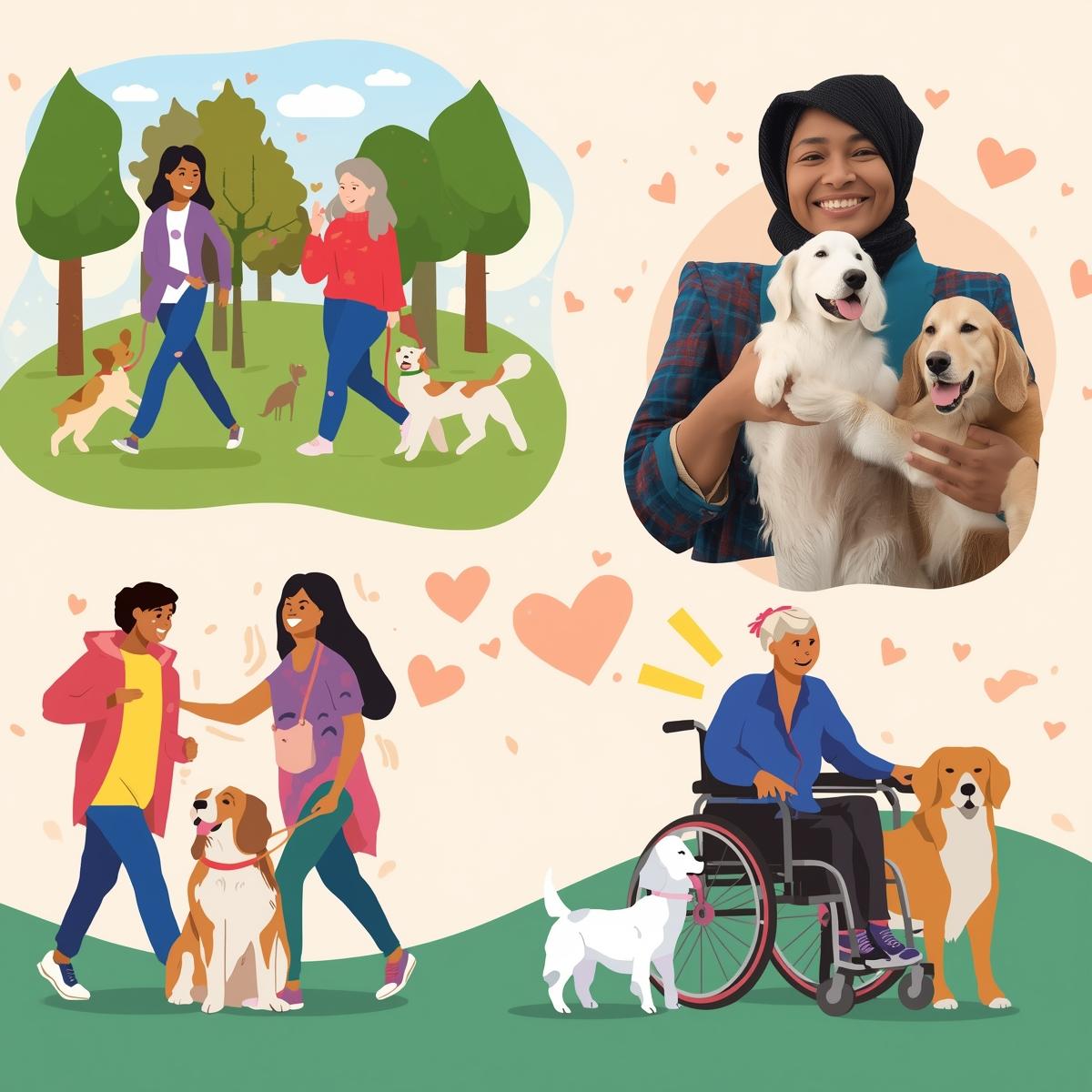
Dogs aren’t just pets — they’re low-key life-boosters. Some studies even estimate that having a dog can feel as valuable to your overall happiness as earning tens of thousands a year. Young adults consistently report big jumps in life satisfaction thanks to the comfort, routine, and emotional stability their pets bring.
Beyond the mental health perks, dogs keep people moving. Daily walks build healthier habits without feeling like “exercise,” and even short moments of interaction have been shown to improve heart rate patterns and stress levels. Growing up around dogs may even help strengthen the immune system and lower the risk of certain allergies.
Their impact goes far beyond the home, too. Therapy dogs support people navigating anxiety, depression, trauma, autism, and chronic illness. They bring comfort to older adults, reduce fear in hospital settings, and offer genuine companionship to people experiencing homelessness — many of whom rely on their dogs as their primary source of emotional support.
And then there are assistance dogs, whose skills transform independence for people with disabilities. From guiding visually impaired owners through busy streets to detecting seizures or blood sugar shifts, these dogs provide life-changing safety and autonomy.
The bond runs deep — so deep that losing a dog can feel like losing a family member. Yet despite being often overlooked, that grief speaks to something universal: across generations and lifestyles, dogs anchor us, steady us, and make the world feel a little more manageable.